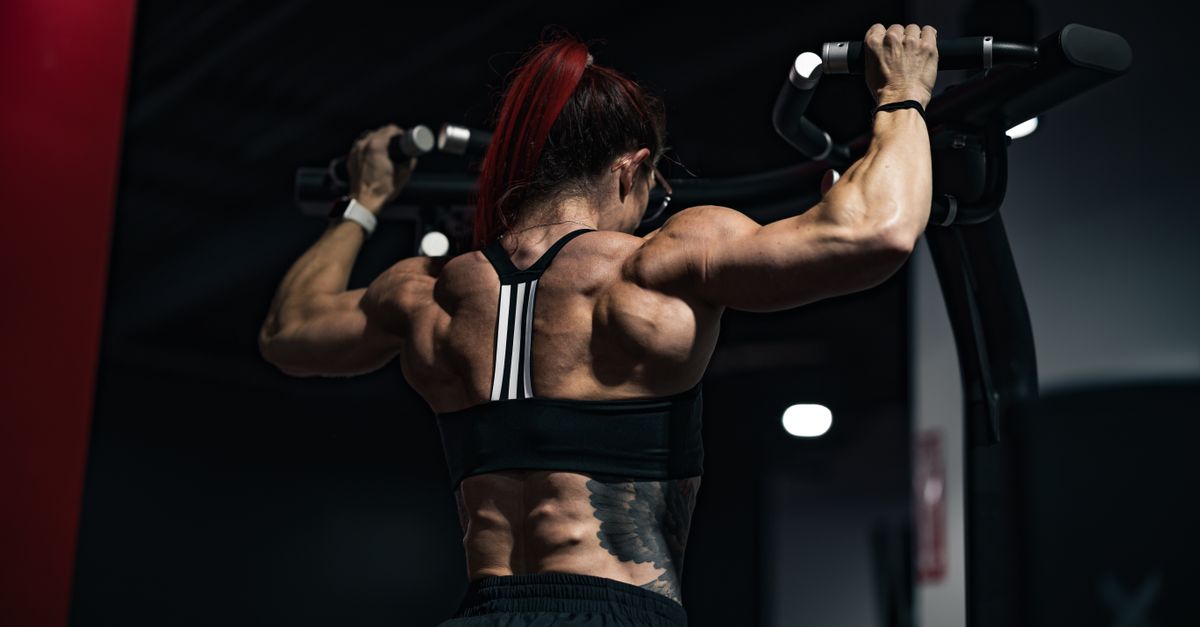
Ever look in the mirror after months of heavy lifting and wonder why your shirts still hang straight down like a flat towel on a rack? You’re grinding away, but you aren’t seeing that broad, confident shape you want. If you feel like your torso just looks like a narrow rectangle, you’re not alone. Building a wider back can feel tricky when you’re pulling weights without knowing where that effort is actually going. In this guide, you’ll discover the exact gym moves that stretch your back out sideways, simple tweaks to feel the right muscles firing, and common traps you must avoid. By the end, you’ll have a clear game plan to build a powerful V-taper that turns heads.
Meeting Your Back’s Secret Wings
Picture a kite soaring in the sky. It has a diamond shape, wide across the top and tapering down to a sharp point. That is what a wide back looks like on a person, and fitness folks call it the V-taper. The muscle responsible for that wide look is the latissimus dorsi, or “lats” for short.
Your lats start right under your armpits and sweep all the way down toward your hips. When they grow, they flare outward like a cobra spreading its hood. If you only train your chest and shoulders, you end up looking thick from front to back, but you stay narrow from side to side. To get wide, your lats have to do the heavy lifting.
Nailing the Wide-Grip Lat Pulldown
The lat pulldown machine is the undisputed king of building back width. Yet, most people in the gym use it completely wrong. Let’s imagine a fictional lifter named Alex. Alex loads up the whole weight stack, grabs the bar, and leans back so far he is practically lying down on the bench. He yanks the bar to his belly button with his arms. Alex leaves the gym wondering why his biceps hurt while his back stays flat.
To avoid Alex’s mistake, you want to set things up differently:
- Grab the bar slightly wider than your shoulders.
- Sit tall with a tiny lean backward, just enough so the bar doesn’t bump your nose.
- Think about driving your elbows straight down toward your back pockets, rather than pulling with your hands.
- Pause for a split second when the bar touches your upper chest, then let it stretch your arms all the way back up slowly.
When you focus on the elbow drive, your hands just act like hooks. That little mental switch forces your lats to wake up.
Conquering the Classic Pull-Up
If the lat pulldown is your bread, the regular overhand pull-up is your butter. Moving your own body weight through space sends a massive shockwave to your muscles that machines just can’t completely copy.
Pull-ups are hard, and there’s zero shame if you can only do one or two right now. Here at our fitness brand, our team works with people every week who struggle to hit their first clean rep. The secret is to avoid kicking your legs like a fish out of water. Keep your ankles crossed, squeeze your belly tight, and pull your chest toward the bar. If you can’t get all the way up yet, loop a thick rubber band around your knee or use the assisted pull-up machine. Consistency here builds wings faster than almost anything else.
Tweaking the Cable Row for Width Instead of Thickness
Rowing is often viewed as a move for back thickness, but with one simple change, it transforms into an awesome width builder. It all boils down to your elbows and where your hands finish.
When you pull high toward your chest with your elbows flared out, you hit your upper back and traps. That makes you look thick from the side. But if you grab a neutral attachment where your palms face each other, tuck your elbows tight against your ribs, and pull low toward your belly button, the tension shifts straight into your lower lats. You’ll feel a deep, burning stretch right above your hips on every rep.
Balancing Things Out with the One-Arm Dumbbell Row
Nobody has two sides that are perfectly identical. Take another imaginary gym-goer named Maya. Maya noticed that her right lat was much wider than her left, making her look a bit lopsided in tank tops. When she did barbell rows, her stronger right side was secretly doing 70 percent of the work without her even realizing it.
Single-arm dumbbell rows solve this issue completely. Place one knee and one hand flat on a bench for support. Pick up a dumbbell with your free hand and let it hang down. Pull the weight back toward your hip, keeping your torso completely still. Don’t twist your body to cheat the weight up. By training one side at a time, your weaker lat has no choice but to catch up.
The Bicep-Bypassing Straight-Arm Pulldown
Ever have a back workout where your forearms and biceps gave out before your back even felt tired? It happens all the time because your arms naturally want to help pull.
That is why the straight-arm cable pulldown is such a great weapon. Stand in front of a high cable pulley with a straight bar. Keep your arms nearly straight with just a tiny, soft bend in the elbows so your joints don’t ache. Without bending your elbows any further, sweep the bar down in a wide arch until it taps your thighs. It feels almost like doing a pullover. Because your elbows never bend, your biceps can’t jump in to steal the work. Your lats take the entire hit.
Feeding the Growth and Letting It Recover
Lifting the weights is only half the battle. Think of the gym as the demolition crew that breaks down the old house, while food and sleep are the construction crew that rebuilds it bigger and wider.
If you don’t eat enough protein, like eggs, chicken, tofu, or Greek yogurt, your muscles won’t have the raw bricks they need to grow. Shoot for a solid palm-sized portion of protein with your meals. On top of that, turn off the late-night phone scrolling. Your body releases growth hormones while you sleep. Give yourself seven to eight hours of solid rest each night, and those tough gym sessions will actually turn into real results.
Getting a wider back doesn’t require spending four hours a day at the gym or doing fifty confusing exercises. It comes down to picking the right foundational lifts, locking in your technique, and really feeling those lats do the heavy lifting instead of letting your arms take over. We’ve walked through the best pulls, row angles, and isolation tricks that transform a boxy frame into a broad, balanced shape. Remember to stay patient, eat enough protein to feed new tissue, and take your rest days seriously. Building muscle takes time, but every solid rep gets you closer to your goal. Pick two of these moves to test on your next pull day, and watch your back start spreading its wings.