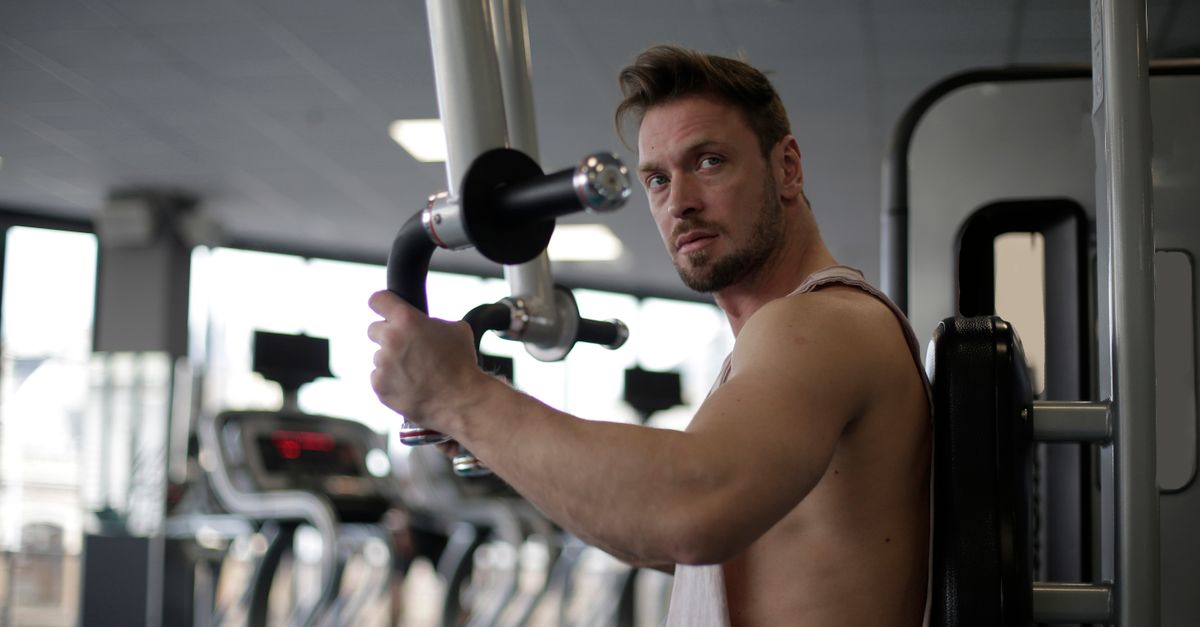
You have been hitting the gym consistently, pushing through bench presses and bicep curls, but your upper back still feels flat and stiff. Maybe you catch yourself slouching at your desk, wondering why your neck aches after a long day. You want that strong, athletic posture and a back that looks built, but wandering around the weight room without a plan will not get you there. In this guide, we are breaking down how to train your trapezius muscles using standard gym equipment. You will learn how these muscles actually move, the best machines and free weights to use, and simple form fixes to protect your neck. By the end, you will know how to build real upper-body power safely.
Unlocking the Giant Muscle on Your Back
Most folks think traps are just those small lumps of muscle sitting next to your neck. That is only a tiny piece of the story. Your trapezius is actually shaped like a giant diamond or kite that stretches from the base of your skull all the way down to the middle of your spine.
Think of it in three distinct zones:
- The Upper Traps: These pull your shoulder blades up toward your ears, like when you shrug your shoulders and say, “I don’t know.”
- The Middle Traps: These yank your shoulder blades back together, like you are trying to pinch a pencil between your back pockets.
- The Lower Traps: These pull your shoulder blades down and help keep your chest tall.
If you only train the top part, you end up with tight shoulders and poor posture. Balancing all three zones gives you a back that is sturdy and painless.
The Classic Barbell Shrug Done Right
The barbell shrug is the king of upper-trap builders, but it is also the easiest move to mess up. Take a fictional gym rookie named Leo. Leo loads four heavy plates on each side of a bar, grabs it, and starts rolling his shoulders in frantic circles like a windmill. The next morning, his neck throbs, and his back feels untouched.
Rolling your shoulders does not build muscle. It just grinds your joints.
To do it right, grab the bar right outside your thighs with an overhand grip. Stand tall with your ribs tucked down. Now, shrug your shoulders straight up toward your ears. Pause at the top for a full two count, then lower the bar slowly. That controlled stretch at the bottom is where the real muscle growth starts.
Switching to Dumbbells for Natural Movement
While barbells are great for moving heavy weight, they lock your hands in front of your body. That can feel a little awkward on your wrists and collarbones. Dumbbells solve this instantly because your arms hang freely at your sides.
Grab a pair of medium-weight dumbbells and stand with your feet hip-width apart. Instead of standing totally upright, hinge forward at your hips just an inch or two. This tiny forward lean lines up the movement with the natural angle of your upper muscle fibers. Pull straight up and slightly back. You will feel a deep squeeze that you just cannot get with a straight bar.
Cables and Constant Tension
Free weights are awesome, but they have one big limitation: gravity. Dumbbells and barbells only pull straight down. Cable machines, on the other hand, pull from whatever angle you choose, keeping tension on your back the whole time.
Set a cable pulley down by your shins and attach a straight bar. Step back a foot or two so the cable pulls you slightly forward. As you shrug up and back against the cable, your muscles work against the resistance every single inch of the repetition. There is no dead spot at the bottom. It burns quickly, and that constant squeeze creates amazing muscle tone.
Targeting the Mid-Back with Chest-Supported Rows
Now it is time to move past the neck and hit the middle traps. These are the muscles that stop you from slumping over your phone. The best tool for this job is an adjustable workout bench set to a low incline.
Lay face down against the pad with a dumbbell in each hand. Let your arms hang straight down toward the floor. To begin the pull, drive your elbows back and pinch your shoulder blades together. The bench supports your chest, meaning you cannot swing your lower back to cheat the weight up. When our team works with people struggling with rounded shoulders, this is the exact exercise we recommend to help wake up the mid-back.
Face Pulls for Health and Strength
If you want strong lower traps and happy shoulders, the rope face pull is a must-have tool. Head over to a cable station, set the pulley right around eye level, and snap on a rope attachment.
Grab the ends of the rope with your thumbs pointing backward. Step back to take up the slack. Pull the center of the rope straight toward your nose while pulling the handles apart. At the finish line, your hands should be beside your ears, making a double bicep pose. This moves your shoulder blades backward and downward at the same time, hitting the lower parts of the trap that standard shrugs completely miss.
Farmer Walks as the Ultimate Finisher
Sometimes the simplest moves are the most brutal. You do not need fancy setups to build real grit. You just need heavy things and a little bit of floor space.
Pick up two heavy dumbbells or kettlebells from the rack. Stand up tall, pull your shoulders back, and pretend you are trying to touch the ceiling with the top of your head. Now, take slow, deliberate steps for forty yards. Your traps must work overtime just to keep your arms from being pulled out of their sockets. It builds crazy grip strength, bulletproof traps, and rock-solid core stability all at once.
Ditching the Ego to Protect Your Spine
Building an impressive back takes effort, but stacking on way too much weight will backfire fast. When you lift more than you can handle, your neck muscles jump in to save the day, leading to nasty tension headaches.
Keep your reps smooth. If your head is jutting forward like a turtle every time you shrug, the weight is too heavy. Drop the load, slow down your pace, and make the target muscles do the real lifting.
Building strong traps does not require complicated routines or secret tricks. By understanding that your traps cover your upper, middle, and lower back, you can pick the right gym tools for the job. Use barbells and dumbbells for raw upper-back power, rely on cables for smooth joint tension, and pull rows to fix your everyday posture. Mix these moves into your weekly training, keep your movements clean, and leave your ego at the door. You will notice better posture, less everyday stiffness, and a strong, balanced look that carries over into everything you do inside and outside the gym. Grab those weights, focus on the squeeze, and watch your hard work pay off.