You walk up to the bench, lie down, and grab the steel bar. But every time you push the weight up, your shoulders complain, your feet wobble, and you feel stuck at the exact same numbers. If you are an everyday lifter trying to build real strength without beating up your joints, you are not alone. Most folks treat the bench press like a simple arm exercise, but it is actually a full-body lift. In this guide, you will learn how to root your feet into the floor, find your sweet-spot hand grip, and line up the bar so every rep feels smooth. By the end, you will feel steady as a rock and ready to add weight safely.
Building Your Base from the Floor Up
Think of your body like a crane. If a crane tries to lift a heavy shipping container while parked on soft sand, it will tip over immediately. It needs solid ground to push against. The very same thing happens on a workout bench.
Your lift does not begin in your chest or your arms. It starts right down at your shoes. When you set up, pull your feet back toward your hips just far enough that your legs feel like loaded springs, but keep your heels firmly planted. Imagine you are trying to slide a piece of paper forward with the soles of your shoes. That pressure turns on your thighs and your butt cheeks. When you push against the ground, that energy travels straight through your torso and right into the bar.
Finding the Right Foot Stance for Your Body
Everyone is built a little differently. Some people have long legs like a flamingo, while others are built closer to a fire hydrant. Because of that, your feet might not look like your buddy’s feet.
Let’s picture a fictional lifter named Alex. Alex has long legs and tried tucking his feet way back under the bench on his tiptoes. Every time he pressed, his hips popped up off the pad and his lower back pinched. Once he kicked his feet out just a little wider and pressed his heels flat into the floor, everything changed. He felt completely glued to the bench.
Here are two common ways you can set your feet:
- Flat feet slightly out: Great for overall stability and keeping your hips down.
- Tucked back with active heels: Good if you have flexible ankles, as long as your butt stays on the pad.
Try both with an empty bar to see which one makes you feel sturdy.
Locking Your Shoulders into the Bench
Once your feet are stuck to the floor, you need to create a flat shelf for your upper body. If your shoulders are rolled forward, your chest muscles cannot do their job, and your delicate shoulder joints end up taking all the beating.
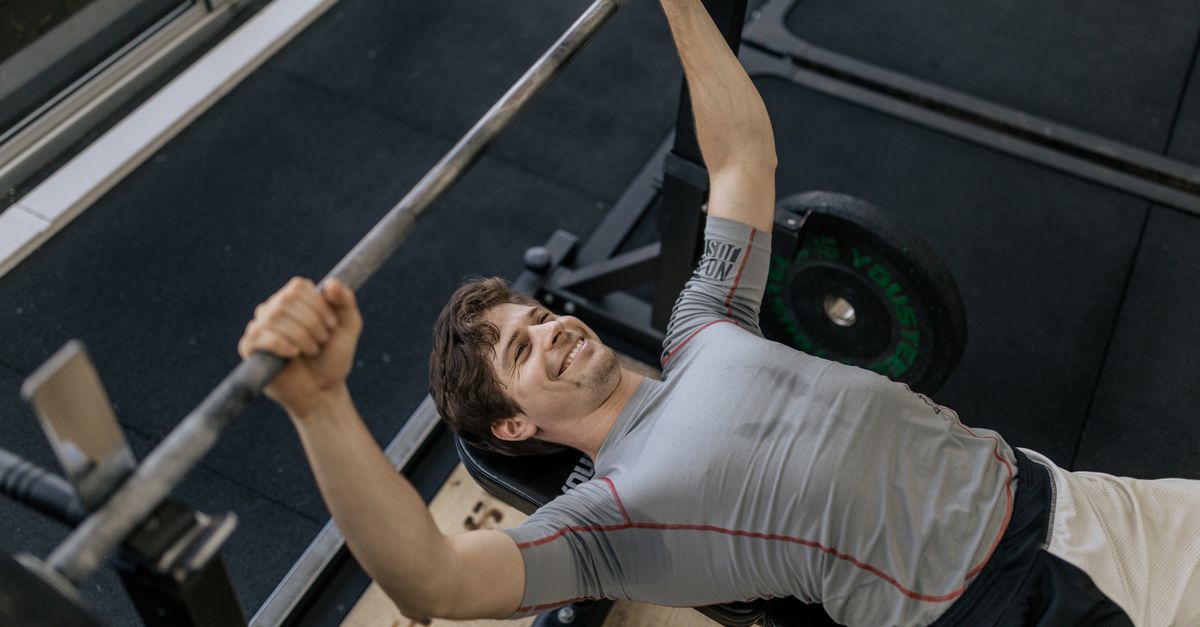
Lie back and squeeze your shoulder blades together. Imagine you are trying to pinch a pencil between your back muscles so it doesn’t fall. Then, slide those shoulder blades down toward your back pockets. This puffs your chest up naturally. Whenever folks chat with our team here, this is the first thing we look at. Pulling those shoulders back protects the joint, shortens the distance the bar has to travel, and gives your arms a rock-solid foundation to push from.
Dialing In Your Grip Width and Wrist Angle
Now that your body is anchored, reach up and touch the bar. If you grab it way too wide, your shoulders will scream. If you grab it way too close, your triceps will tire out before your chest even knows what happened.
For most people, the magic spot is where your forearms stand straight up and down—like two vertical pillars—when the bar touches your chest. Look at the little smooth ring marks on the bar. Start by placing your ring finger or middle finger on that line, then adjust as needed.
Pay close attention to your wrists. A lot of lifters let the bar sit high up near their fingers, which bends their hands backward. That hurts! Instead, rest the bar across the base of your palm, right above the bones of your forearm. Think about throwing a punch; you would never punch something with a floppy wrist.
The Magic of the Full Squeeze
Once your hands are in position, do not just hold the bar like an ice cream cone. Wrap your thumbs fully around it and squeeze the knurling as hard as you can. Try to crush the metal into dust.
This is not just for grip safety. When you squeeze hard, a cool thing happens in your nervous system. Your brain sends signals to your forearms, biceps, and shoulders to wake up and tighten. You can even try an old trick: imagine you are trying to bend the bar in half away from you. That tiny twisting motion locks your upper back even tighter into the bench before the bar even moves.
Lining Up Your Eyes and the Bar Before Unracking
Where are you lying on the bench before you lift the weight out of the hooks? This simple step messes up a lot of people.
If you lie down too far down the bench, you have to reach way back over your head to grab the bar. That pulls your shoulders out of position instantly. If you lie too far up, you will clang right into the metal hooks when you press. Look straight up at the ceiling. The bar should cross directly over your eyes or your nose. From this spot, pulling the bar out over your chest feels easy, like sliding a drawer open, rather than doing a heavy shoulder raise.
Guiding the Bar to the Sweet Spot on Your Chest
Once the weight is over your chest with your elbows locked, take a deep breath into your belly. You are ready to lower it down.
Do not drop the bar in a straight vertical line toward your neck. That is dangerous and feels awful. Instead, guide the bar forward just a tiny bit as it comes down, aiming for the bottom of your sternum, right around your lower chest. Your elbows should naturally tuck in at roughly a forty-five-degree angle from your ribs, looking like an arrow from above rather than a big “T” shape. Tap your chest softly—no bouncing—and press the bar back up and slightly back toward your eye line. That smooth curve is where you are strongest.
Getting a massive, pain-free bench press is not about luck or just having giant arms. It all comes down to building a solid structure before you even think about lifting the bar. By rooting your feet into the ground, locking your shoulder blades down like you are sliding them into your back pockets, and setting a firm, stacked grip, you give your body a rock-hard launchpad. From there, lining your eyes under the steel and guiding the weight right to the lower chest keeps your joints smiling. Take your time setting up on your next workout. When you nail these details, the bar starts flying off your chest, and lifting heavy gets a whole lot more fun.