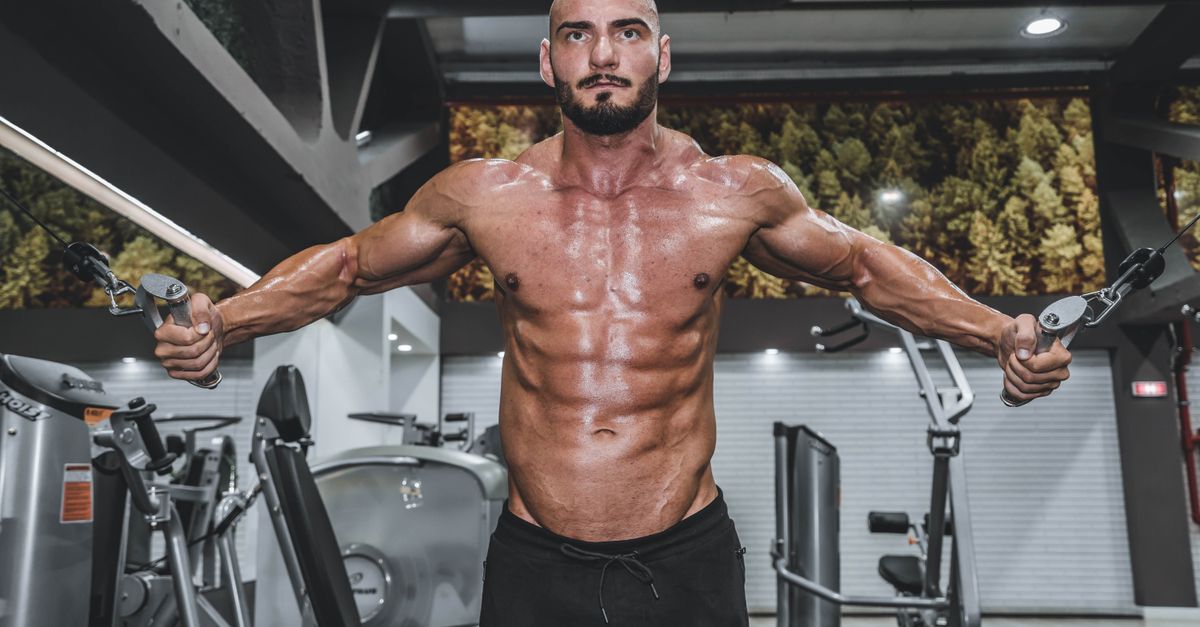
You hit the gym floor ready to build a bigger, stronger chest, but the cable station feels like a trap. Every time you open your arms wide, your shoulders pinch, ache, or pop. You see guys online tearing their arms way back behind their torsos, so you copy them, wondering why your joints feel angry instead of pumped. That confusion stops today. In this guide, we will break down how to find your natural movement zone, protect your joints, and get the most out of every single rep. You will discover exactly how far back you should travel and how to line up the cables to fit your unique build. Best of all, you will leave with a simple plan to train pain-free.
The Rubber Band Trap: Why Overstretching Backfires
Most lifters think a bigger stretch automatically equals more muscle growth. That sounds logical, right? But think of your muscles like a thick rubber band.
If you stretch a rubber band smoothly, it snaps back with tons of power. Pull it too far, though, and the sides fray. Pull it even harder, and it snaps. That is exactly what happens when you let the cable handles drag your hands way behind your back. Your pecs give up, and all that heavy weight suddenly hangs directly on your delicate shoulder capsules.
Here is a fictional example: imagine a lifter named Sam who loads up the stack, flies his hands behind his ribs, and feels a sharp jab in front of his shoulder. Sam thinks he is getting an elite stretch. In reality, his chest stopped doing the work three inches earlier. His ligaments are simply screaming for help. Building muscle requires tension on the muscle, not your joint cartilage.
Meet Your Shoulder’s Natural Bumper
Your shoulder joint is basically a golf ball sitting on a tiny golf tee. That setup gives your arm great freedom to throw, reach, and swim. But that mobility comes at a real price.
Inside that joint sits a roof of bone called the acromion. When you sweep your arm straight out to the side and push it back too far, the upper arm bone runs out of room. It bangs right into that bony roof. Rubbing them together under a heavy load causes pinching and inflammation.
We see people run into this roadblock all the time when coaching fitness fans, and the fix is simpler than you think. You do not need to fight your natural anatomy. Your body has an invisible bumper where the chest safely stops opening. Learning to stop at that bumper, instead of ramming through it, saves your joints for the long haul.
Setting Your Anchor: The Tree-Hugger Setup
Once you understand that your bones need breathing room, your setup changes completely. The biggest mistake beginners make is treating a fly like a press or locked-arm iron cross.
Locking your elbows turns the exercise into a joint grinder. Bending them too much turns it into a messy bench press. Instead, picture wrapping your arms around an enormous oak tree.
- Keep a soft, steady bend in your elbows from start to finish.
- Lock that elbow angle in place; do not bend and straighten your arms during the rep.
- Plant your feet in a split stance, with one foot forward and one foot back, to stop the weights from pulling you off balance.
- Puff your chest up tall, as if showing off a superhero logo on your shirt.
This solid posture locks your shoulder blades down against your ribs, giving your chest muscles a stable launchpad.
The Doorway Check: Discovering Your Sweet Spot
Now that your posture is locked, how do you know where your individual stretch ends? Everyone has different arm lengths, collarbone widths, and shoulder sockets. What feels awesome for your training partner might wreck your rotator cuff.
Try this quick test at home without any weights. Stand in the center of an open doorway. Raise your arms out to your sides with your elbows softly bent, just like you would on the cables. Slowly step forward until your arms touch the doorframe. Now, gently lean into the doorway until you feel a comfortable, warm stretch across your pecs.
Notice where your elbows are. For most folks, their elbows sit roughly in line with their torso, or maybe just an inch behind it. That is your active sweet spot. There is zero reason to pull the cables further back than this point. Anything past that line is just wasted movement and joint strain.
Lining Up the Cables to Match Your Motion
Once you know where your sweet spot lives, you have to match the cable machine to your body’s natural angles. If the machine pulls against your joint pathways, you will feel awkward no matter how careful you are.
Muscles do their best work when they pull in a straight line with their fibers. Your chest fans out from your collarbone down to your lower ribs, which means you have choices:
- High to Low: Setting the pulleys above your head targets the lower chest and feels natural for folks with fussy shoulders.
- Low to High: Setting the pulleys near your shins hits the upper collarbone area, but requires lighter weight to keep your shoulders happy.
- Chest Height: Setting the pulleys right at armpit level works the meaty center of the pec.
If a flat angle pinches, slide the pulleys up a few notches. Changing the angle often makes pain disappear instantly.
The Magic at the Middle: Make the Squeeze Count
Since you are no longer chasing an extreme, risky stretch behind your back, you might wonder where the real muscle-building stimulus comes from. The answer is simple: the front half of the movement.
Dumbbells get super easy at the top of a fly because gravity pulls straight down. But cables provide constant tension all the way across. When your hands come together in front of your chest, the tension is at its absolute peak. Take advantage of that.
Do not just slam the handles together and bounce right back into the stretch. Bring your hands inward, pretend you are crushing an empty soda can between your pecs, and hold that tight squeeze for a full one-second count. That quiet hold lights up more muscle fibers than a reckless, overstretched rep ever could.
Listening to Quiet Warning Signs
Finding a comfortable range is not a one-time fix; it changes depending on your sleep, your warm-up, and everyday fatigue. You have to listen to the small clues your body drops.
Good muscle work feels like a deep, spreading warmth in the meat of your chest. Bad joint stress feels like a pinch, a sharp needle poke, or an ache in the front corner of your shoulder. If you feel that sharp prick, do not try to tough it out. Cut two inches off your backward stretch, lower the weight by a plate, and focus on form.
Smart lifting is about playing the long game. The lifter who trains with pain-free technique week after week will always build more muscle than the person sitting on the couch nursing an injured rotator cuff.
Dialing in your cable chest flyes does not require fancy tricks or risking your shoulders for extra range. By swapping extreme stretches for a secure, comfortable path, you keep the tension right where it belongs: square on your chest. Remember to keep that slight bend in your arms, stay inside your natural doorway sweet spot, and let the peak squeeze do the heavy lifting. Pay close attention to joint warning signs and adjust your pulley height whenever something feels slightly off. When you respect how your joints are built, you get all the benefits of muscle growth without any of the nagging aches. Step up to the cables with confidence, own your movement, and enjoy the pump.