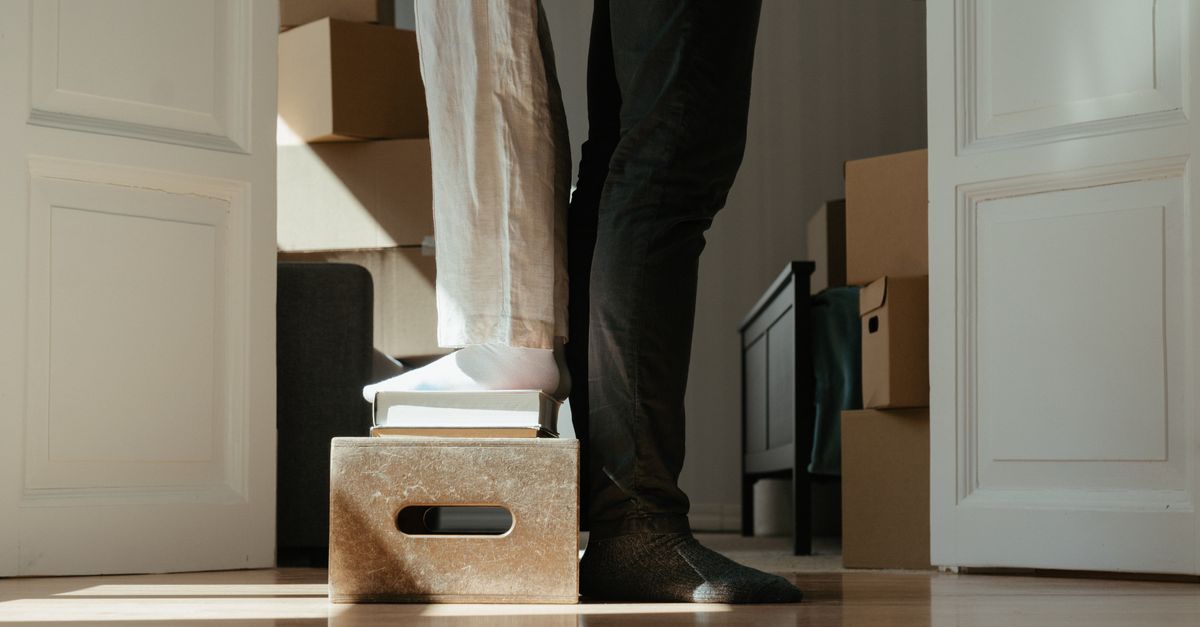
You are standing in the gym or your garage, staring down a wooden plyo box. You want stronger legs, better balance, and knees that don’t whine every time you take the stairs. But you are stuck on one simple question: how high should this platform actually be? Pick a box that is too short, and you feel like you are stepping on a phone book. Pick one that is too tall, and you risk wiping out in front of everyone. In this guide, you will discover how to match the box to your own body, how your fitness goals change the math, and the easy way to test your height right now. Get ready to finally make step-ups feel smooth, safe, and totally painless.
The Goldilocks Rule for Step-Up Boxes
Think back to the old story of the three bears. One bed was rock hard, one was way too soft, and one was just right. Box step-ups work the exact same way. If the platform is barely off the floor, your leg muscles do not get to stretch and work through their full range. But if the surface sits up near your ribs, you turn a leg exercise into a desperate climbing drill.
For most folks just trying to move better, the sweet spot sits somewhere around knee height. When you put your front foot flat on the box, your thigh should end up pretty close to parallel with the floor. That makes your knee bend at roughly a ninety-degree angle, just like sitting on a dining room chair. It gives your thighs and glutes plenty of room to push without twisting your back out of whack.
What Happens When the Box Is Way Too High
Let’s picture a fictional guy named Leo. Leo wants bigger glutes fast, so he grabs the tallest box in the room, a monster that comes up past his hips. He puts his right foot on top, grunts, leans his entire upper body forward, and catapults himself off his back foot like an astronaut jumping on the moon.
Did Leo’s front leg do the work? Not really. His back calf launched him, and his lower spine rounded like an angry cat just to pull himself upright. When the box is too tall, a few bad things happen fast:
- You end up bouncing off your back toes instead of pressing with your working leg.
- Your lower back rounds, which dumps pressure straight into your spine.
- Your front knee might cave inward, which is never a great feeling.
If you have to lean forward so far that your nose touches your kneecap just to stand up, the box won’t do you any favors. Lower it down.
Match the Height to Your Specific Goal
Not everyone hits the gym for the same reason, and your box should match what you are chasing. You can actually tweak the height by just a few inches to hit totally different muscles.
If your main goal is to build strong quads—the front part of your thighs—you will love a box that sits right below your knee cap. Stepping onto a slightly lower box lets you keep your torso taller. Your knee travels forward a bit over your toes, loading up the front of your leg without beating up your hips.
Now, say you want to build your glutes and hamstrings. A box that sits right at knee height or an inch above works wonders. That deeper bend forces your backside to wake up and pull you to the top. Just remember to lean forward slightly from your hips while keeping your back flat. Don’t go crazy high; an extra two inches is all it takes to shift the work backwards.
Listening to What Your Joints Are Saying
Exercise should challenge your muscles, not grind down your joints. Your ankles, knees, and hips are like the links in a bicycle chain. If one link is stiff, the whole chain gets jerky.
Take ankle mobility, for example. When you step onto a high surface, your ankle has to bend deeply so your shin can tilt forward. If your ankles are tight from sitting at a desk all day, your heel will want to pop off the surface. The second that heel floats in the air, your knee takes all the heat. A lower box lets your entire foot stay glued down, from your big toe to your heel.
If you ever feel a pinch in the front of your hip or an ache behind your kneecap, do not try to be tough. That is your body waving a little yellow flag. Drop the height down four inches and see if that pinch goes away. Usually, it disappears instantly.
How to Measure Your Ideal Box at Home
You do not need a tape measure or a math degree to find your number. You can dial this in right now in your living room with a quick, foolproof test.
Stand next to a sturdy chair, a stair, or your workout platform. Lift one leg so your thigh is flat, just like a table. Check where that knee lands. Now, look at the surface you want to step on. Does the top edge sit right at your knee joint or slightly below it? If yes, that is your baseline.
Try three slow reps without any weights in your hands. Put your whole foot on the surface, keep your chest proud, and stand up without shoving off your back toes. If you can pause at the top for two seconds without wobbling like a newborn deer, you nailed it. If you stumble or have to swing your arms for momentum, drop it down a couple of inches until you look totally in control.
Finding Better Gear and Making Progress Safely
Once you nail the movement on a flat, stable box, where do you go next? You do not have to keep hunting for taller and taller boxes like you are trying to climb Mount Everest. In fact, going higher and higher usually just ruins your form.
Instead, add challenge by holding a light pair of dumbbells at your sides. Or try slowing down your descent. Count to three on the way down before your back foot taps the floor. That slow burn will set your legs on fire way better than a sky-high platform ever could.
Having gear that adapts to you makes a huge difference here. Around our shop, we design adjustable fitness equipment because we know a tall basketball player and a petite runner should not share the exact same box height. Being able to click a platform up or down by two inches lets you train safely, meet your body where it is today, and stay out of the doctor’s office.
Nailing your step-up height comes down to respecting your body instead of your ego. Sticking to a box that sits right around knee height keeps your joints safe, prevents your back from bending weirdly, and makes sure your leg muscles do the heavy lifting. You can always shift the platform an inch up or down to target your quads or glutes, but clean balance and flat feet always come first. Next time you see a plyo box, forget about trying to conquer the tallest tower in the room. Pick the height that lets you move with control, grab some weights when you are ready, and enjoy building strong, healthy legs that carry you through real life.