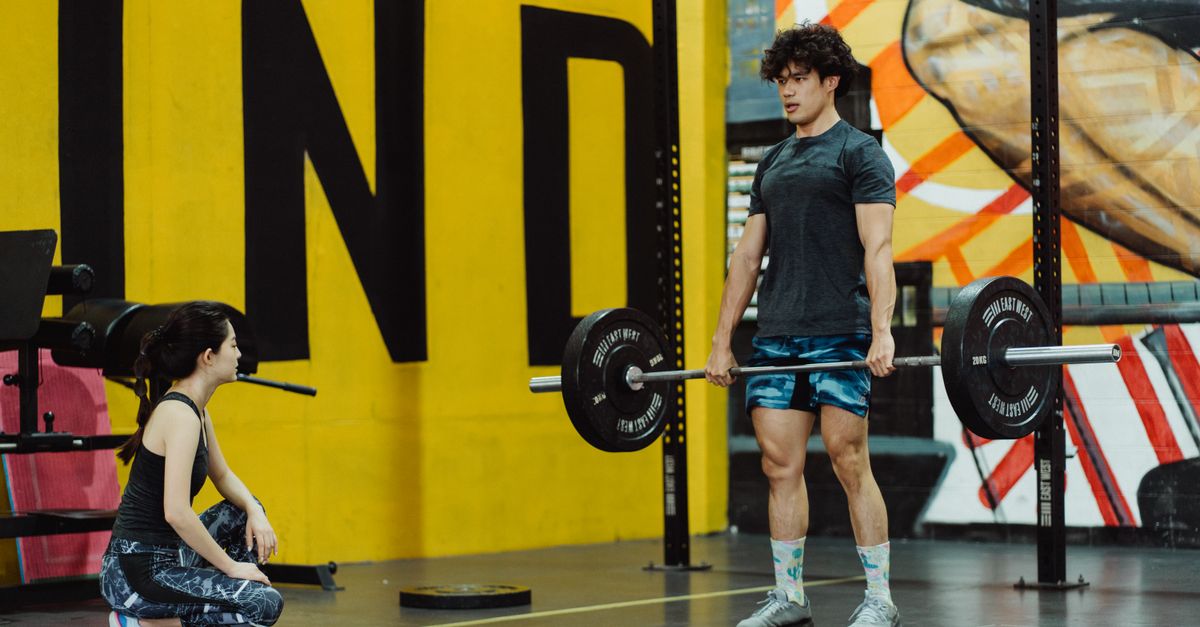
Ever stood over a barbell wondering if you look totally goofy? You want to pull heavy weight, build real strength, and protect your lower back, but you feel completely stuck staring down at your sneakers. Should your feet be shoulder-width apart, or spread out wide like you’re riding a horse? That is the big question when picking between conventional and sumo deadlifts. If your setup is sloppy, the lift feels awful before the bar even leaves the floor. In this guide, we’ll walk through every step of setting up both styles, from your toes right up to your grip. You’ll learn how each stance changes your leverage so you can lift with total confidence.
The Stance: Jumping Position vs. The Giant Crab
Everything starts with where you plant your feet. Think of the conventional deadlift like getting ready for a standing vertical jump. If you asked a kid on a playground to jump as high as they could, they wouldn’t spread their feet super wide. They would put them right under their hips. That is your conventional stance: narrow, compact, and ready to push straight through the floor.
Sumo flips that script completely. Imagine a fictional lifter named Leo walking up to the bar. To set up for sumo, Leo spreads his feet way out toward the weight plates. He looks less like a high jumper and more like a giant crab ready to defend its lunch. Your feet end up well outside your shoulders. Why go so wide? Because it brings your hips closer to the bar, which cuts down the distance the bar has to travel to reach your hips.
Foot Angles: Straight Ahead vs. Pointing at the Walls
Once you pick your width, you have to aim your toes. In a conventional pull, your feet stay mostly forward. A slight outward flare of five to ten degrees works great because it gives your hips a little room to breathe, but they never point sideways.
Sumo demands a totally different angle. Because your stance is so wide, pointing your toes forward would crush your knees and make you tip over. Instead, you flare your toes out at roughly a forty-five-degree angle. The golden rule here is simple: your knees must track directly over your middle toes. If your toes point at the wall, your knees have to point right there with them.
Hand Placement: Outside the Knees vs. Inside the Thighs
Now that your base is set, your hands have to meet the metal. Where your feet land dictates where your arms go. It is a simple game of real estate.
- Conventional Grip: Your hands grab the bar just outside your legs. If your arms touch your shins on the way down, you’re a bit too narrow. You want your arms hanging straight down like ropes from your shoulders to make your reach as long as possible.
- Sumo Grip: Since your feet are way out wide, your hands actually go inside your knees. Your arms hang straight down inside your thighs, usually about shoulder-width apart or even slightly narrower.
Because your arms don’t have to clear your knees in sumo, you gain an extra inch or two of reach. That means less bending over just to touch the steel.
The Shins: Scraping the Bar vs. Standing Straight Up
Before you bend down, look at where the bar sits over your foot. You want the barbell sitting directly over your midfoot in both lifts. That’s about an inch away from your shins when you stand tall.
In a conventional setup, as you drop down, your shins lean forward slightly until they touch the barbell. They will have a small forward angle. In sumo, your shins stay much more vertical from front to back. Instead of leaning forward over the bar, your knees push out sideways. When you drop down into a sumo setup, your shins look like straight pillars holding up a roof.
Torso and Hips: Leaning Over vs. Sitting Tall
This is where you feel the biggest difference in your body. In a conventional deadlift, your hips sit relatively high, and your chest points mostly toward the floor. Picture a hinge on a door. Your body folds in half, turning your back into something close to a tabletop. That means your lower back and hamstrings do a ton of the heavy lifting.
Sumo turns your torso into an upright pillar. Because your knees spread out wide, you can drop your hips lower and closer to the bar without your knees getting in the way. Your chest stays proud, almost like you’re trying to show off a logo on your shirt to someone standing in front of you. This upright angle takes a lot of stress off your lower back and shifts the work right into your hips, quads, and inner thighs.
Pulling the Slack: Wedging Yourself into the Floor
You can’t just bend down, grab the bar, and yank it like you’re starting a lawnmower. If you do that, the barbell will win every time. You have to create tension first. Lifters call this “pulling the slack out of the bar.”
Listen for a tiny metallic click. That happens when the inner bar presses against the holes of the weight plates. In a conventional setup, you pull up on the bar, squeeze your armpits shut like you’re crushing oranges, and push your feet into the floor. In sumo, you “wedge” your hips forward toward the bar while spreading the floor apart with your feet. Both setups require you to be completely tight before the plates ever lift off the gym mat.
Which Setup Fits Your Skeleton?
People love to argue on the internet about which style is better, but your bones actually make the call for you. We see folks run into this hurdle all the time when trying to figure out their ideal movement, and the truth comes down to your personal anatomy.
If you have long arms and a short torso, conventional feels like second nature. You barely have to bend down to grab the bar. If you have deep hip sockets or shorter arms, conventional can feel like you’re folding yourself into a pretzel. That’s where sumo shines. Sumo lets lifters with shorter arms or wider hips stay comfortable and upright. Neither style is cheating. They’re just two different tools for two different skeletons.
Setting up your deadlift shouldn’t feel like guessing on a test. The conventional stance gives you a narrow, powerful base that leans your torso forward and puts your back and hamstrings to work. The sumo setup spreads your feet wide, keeps your chest upright, and turns the lift into a battle for your hips and legs. Neither choice is inherently better or worse. Try spending a few weeks practicing the setup for each style with light weight. Pay attention to how your hips, knees, and lower back feel as you pull the slack out of the bar. Once you find the stance that matches your unique frame, stick with it, stay patient, and enjoy watching your numbers climb.