Ever walked into a gym and felt like you just stepped into a spaceship? Between the maze of metal pulleys, glowing screens, and people lifting things in ways that look like a carnival stunt, it is easy to freeze up. You just want to feel strong and healthy, but you don’t have time to memorize a thick medical textbook. Here’s the secret: you don’t need to. Every single exercise boils down to four simple movement patterns: push, pull, squat, and hinge. In this guide, we’ll break down these big four so you can walk onto the gym floor with absolute confidence, pick the right exercises, and build real-world strength that makes your everyday life feel effortless.
Why Your Body Loves Patterns Instead of Individual Muscles
Most folks walk into a gym thinking about tiny body parts. They think, “Today is bicep day,” or “I need to tone my inner calves.” But your brain doesn’t think in terms of single muscles. It thinks in whole movements.
Imagine a fictional guy named Sam. Sam is helping a friend move an old wooden wardrobe down a flight of stairs. Sam’s brain isn’t yelling, “Fire the left tricep at sixty percent!” Instead, his whole body works together like a well-drilled tug-of-war team. His legs brace, his core locks, and his arms steady the load.
When you train basic patterns instead of tiny spots, three awesome things happen:
- You save a ton of time: Multi-muscle moves burn more energy and build more balance in half the gym time.
- You protect your joints: Muscles learn to share the work instead of dumping all the strain on your elbows or knees.
- You build functional strength: The power you build on the gym mat actually carries over to carrying grocery bags or tossing your kids in the pool.
The Push: Shoving Life Away
The push is as simple as it sounds. You take something heavy and shove it away from your body, or you shove your body away from something flat.
Think about a fictional scenario where your car battery dies in a parking lot. You put your palms on the cold trunk, lean in, and push with everything you’ve got to roll it out of traffic. That is a push pattern in the wild. Your chest, shoulders, and the backs of your arms (your triceps) light up to do the hard work.
In the gym, pushing generally splits into two directions:
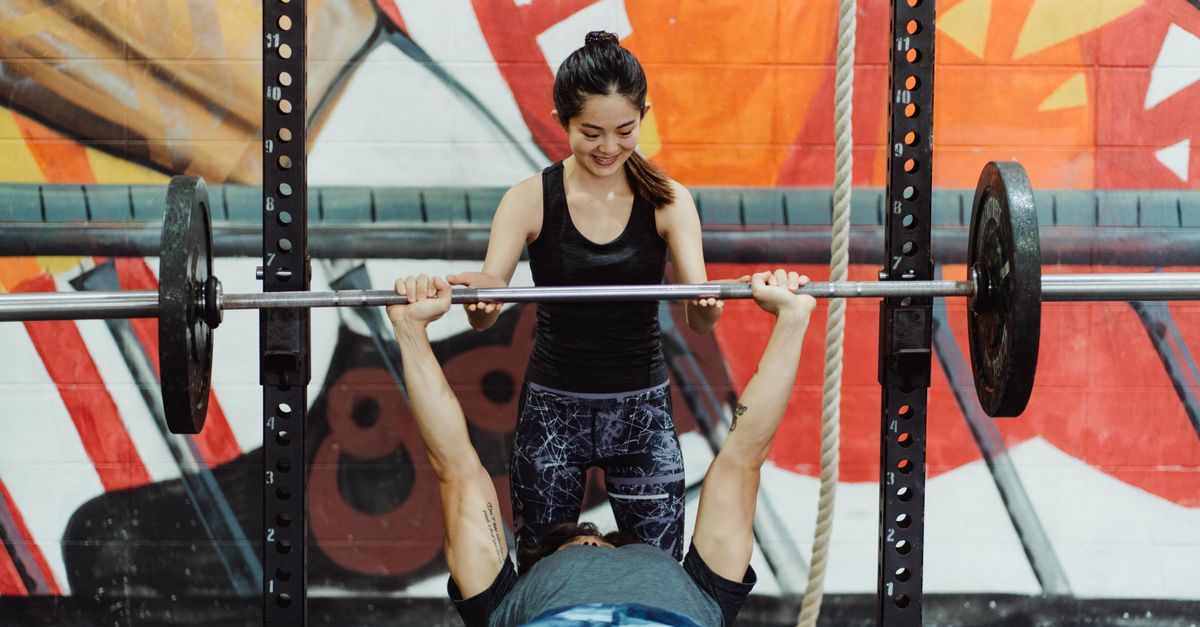
- Horizontal Push: Shoving something straight out in front of you. Think of classic push-ups or lying on a bench to press a pair of dumbbells toward the ceiling.
- Vertical Push: Shoving something straight over your head. Think of picking up a heavy box and stacking it onto a high garage shelf, just like an overhead shoulder press.
The Pull: Bringing the Good Stuff Closer
If the push is about keeping things away, the pull is all about drawing them closer. It is the direct opposite movement, and it might just be the most important weapon against modern life.
Most of us spend our days slouched over phones, keyboards, and steering wheels. Our shoulders roll forward, and we slowly start looking like question marks. Pulling helps fix that. It targets your upper back, your lats (the wide muscles along your ribs), and your biceps. It grabs your posture by the collar and snaps it straight back.
Picture pulling the rip-cord on a lawn mower, or grabbing a heavy suitcase handle to drag it off the airport carousel. That is pulling.
Just like pushing, pulling works in two main flavors:
- Vertical Pull: Pulling something down from above your head, or pulling your chin up to a bar. Lat pulldowns and chin-ups rule this category.
- Horizontal Pull: Pulling something straight toward your belly button. Cable rows and dumbbell rows are your best friends here.
The Squat: Sitting Down and Standing Tall
Now we move down to the legs. The squat is knee-dominant, meaning your knees bend deeply while your chest stays relatively upright.
Here is an easy test. Sit down in a chair. Now stand back up without using your hands. Congratulations, you just did a squat! We do this dozens of times a day without realizing it. Getting out of a low car, climbing off the couch, or hovering over a questionable rest-stop toilet—that is all squatting power.
When you squat, your thighs (quadriceps) take the lead, while your glutes and core steady the ship. If you do them right, squats give you the leg drive to climb flights of stairs without gasping for breath.
To nail your form, picture sitting back into a chair that someone pulled two inches too far back. Keep your feet flat, send your hips down, and drive the floor away through your heels. Don’t let your heels lift off the ground, and keep your chest proud like you’re showing off a logo on your shirt.
The Hinge: Unlocking Your Secret Powerhouse
A lot of people confuse the hinge with the squat, but they are totally different animals. While the squat is knee-focused, the hinge is all about the hips.
Think about a door hinge. The door swings open while the frame stays solid. In a body hinge, your hips are the joint that swings back, while your knees barely bend at all. You push your butt toward the wall behind you while keeping your spine straight like a broomstick.
Here is a real-life snapshot: Imagine you just walked back to your car with your hands loaded with paper grocery bags. You can’t use your hands to close the car door, so what do you do? You bump the car door shut with your backside. That quick butt-back motion is a pure hip hinge.
Exercises like deadlifts and kettlebell swings live here. They fire up your “posterior chain”—a fancy term for the muscles running down your back, glutes, and hamstrings. This movement teaches you how to pick up heavy objects from the floor using your strong hips instead of blowing out your lower back.
Putting the Big Four Together
The beauty of these four movements is that you don’t need a ninety-minute workout to see serious results. You don’t need to juggle twenty different machines.
Whenever someone drops by our training programs feeling lost, this is the exact system we give them. It strips away all the guesswork. A balanced, rock-solid workout can be as simple as picking one move from each bucket:
- A Push: Dumbbell chest press or floor push-ups.
- A Pull: Single-arm dumbbell rows or cable rows.
- A Squat: Bodyweight air squats or goblet squats holding a light weight.
- A Hinge: Kettlebell deadlifts or glute bridges.
Run through those four movements three times a week. Suddenly, you’ve hit every single major muscle group. You haven’t wasted energy wandering around the gym, and you’ve built real strength that keeps your joints happy.
Fitness doesn’t have to feel like solving a puzzle with missing pieces. When you boil gym workouts down to pushing, pulling, squatting, and hinging, all the confusing noise fades away. You don’t need fifty complicated gadgets or trendy stunts to get strong. All you need is a steady mix of these basic patterns that work your body the way nature intended. Whether you’re shoving a heavy door open, hauling groceries upstairs, or picking up a box off the garage floor, you use these patterns every day. Start small, nail your form, and trust the process. Once you master the big four, you’ll walk into any gym with total confidence and walk out feeling unstoppable.