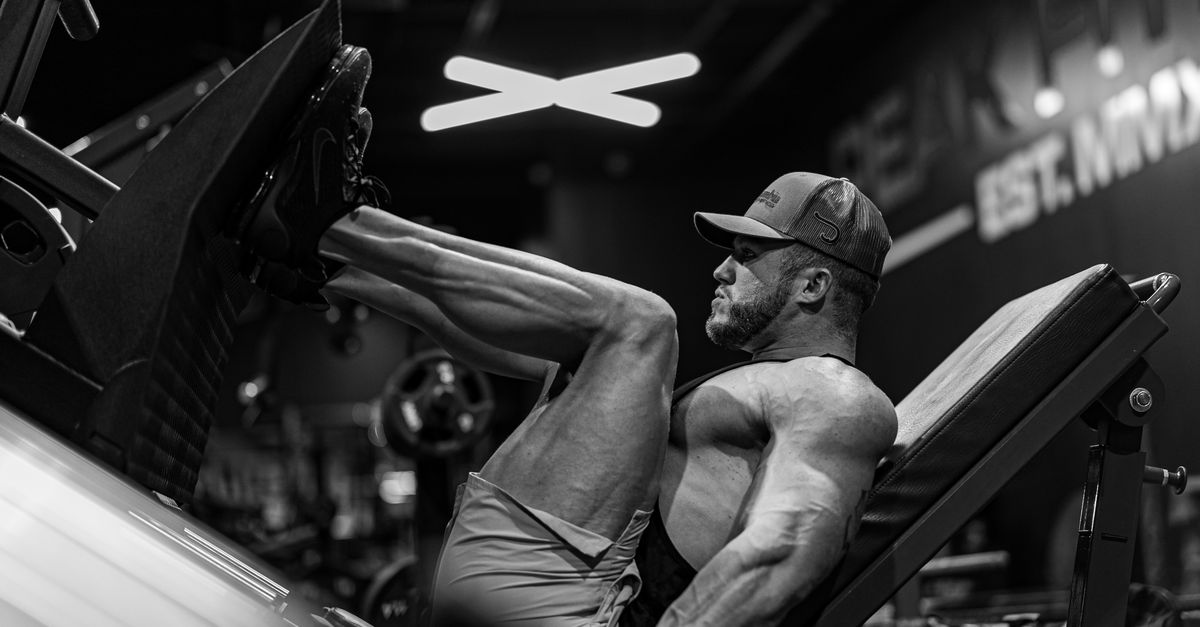
You hit the gym four days a week, sweat through your shirt, and push until your arms shake. Yet, your bench press numbers won’t budge, and your knees feel cranky after leg day. It feels like you’re doing everything right, but getting nowhere. Here’s the secret: you might be skipping half the exercise without even knowing it. Most lifters only care about pushing the weight up, completely forgetting the journey back down. In this guide, you’ll discover the magic of eccentric training—the art of controlling the lowering phase. We’ll show you how muscle fibers react when they stretch, why gravity is stealing your progress, and how tweaking your tempo fixes your aches. Get ready to finally smash that stubborn plateau.
The Half of the Lift You Keep Throwing Away
Think about a basic bicep curl. You pull the heavy iron dumbbell up toward your chest, grunting and clenching your teeth. Then, as soon as it reaches the top, you just let it drop back to your thighs so you can rest for a split second. Sound familiar? Almost everyone does this.
Lifting the weight up is called the concentric phase. It gets all the glory because that’s the part people see in movies. But dropping the weight on the way down cheats you out of real results. That downward trip is called the eccentric phase, and it turns out your muscles are built to do some of their best work right there.
The Brakes on a Moving Car
To picture how this works, let’s paint a fictional scenario. Imagine a high school kid named Leo helping his neighbor carry an awkward, heavy wooden chest down three flights of steep stairs. He can’t just let go, or the chest crashes through the steps. Instead, his leg and arm muscles have to work as shock absorbers, slowly resisting gravity with every step down.
That resistance is eccentric motion. Your muscle fibers stretch out while they fight to hold onto a load. The wild thing is, your body can handle about twenty to forty percent more weight while lowering than while pushing up. You’re naturally stronger when acting as a brake. If you ignore the downward slide, you’re leaving half your potential at the door.
Tiny Tears That Build Mighty Muscle
Muscles don’t grow because you ask them nicely. They grow because you challenge them enough that they have to rebuild stronger for next time. When you pull a muscle apart under a heavy load, it creates microscopic tears along the muscle strands. Don’t panic—that’s a good thing.
During the lowering phase, fewer muscle fibers share the same heavy load. That means each little fiber takes on way more tension. This deep mechanical tension sends a loud wake-up call to your body: we need to make this muscle thicker and tougher immediately. Our team at MotionCraft often watches lifters shatter month-long plateaus simply by slowing down their descent, without even adding a single pound of iron to the barbell.
Saving Your Joints and Tendons
Have you ever seen someone bounce a heavy barbell right off their ribs during a bench press? It hurts just to watch. When you dive down fast and bounce, your muscles turn off, and your poor tendons and ligaments catch all that sudden shock.
Slowing things down flips the script. Controlled lowering works like a gentle tune-up for your connective tissues:
- It teaches tendons to act like sturdy rubber bands instead of brittle twigs.
- It wipes out the jerky momentum that grinds your joints raw.
- It builds steady balance across your whole joint, keeping your knees, elbows, and shoulders happy for years to come.
How to Put the Brakes On in the Gym
You don’t need a fancy machine to start eccentric training. You just need a clock and some patience. Next time you drop down for a push-up or squat, stop rushing. Own the movement.
Try using a simple four-second count on the way down:
- Start at the top of your push-up.
- Lower your chest slowly while counting out loud: one-one-thousand, two-one-thousand, three-one-thousand, four-one-thousand.
- Hold the bottom for a quick beat.
- Push up fast and strong.
Do five of those in a row. You’ll feel a burn in your chest you’ve never felt before, even though you didn’t add any weight at all.
Dodging the Next-Day Soreness Monster
There’s a small catch you should know about before diving in headfirst. Because the lowering phase creates more fiber tension, it also makes you noticeably sorer the next day. If you jump into high-speed eccentric workouts right away, you might walk like a rusty robot on Tuesday.
Start small. Pick just one exercise in your workout—maybe your leg press or pull-ups—and use slow lowering on only the last two sets. Give your body a few days to catch up, drink plenty of water, and get solid sleep. Your muscles will quickly adapt, and the extreme soreness will fade into a steady, powerful feeling of real strength.
Building a resilient body isn’t just about how much iron you can shove into the air. It’s about how well you command that weight on its return trip. As we covered, the lowering phase—your eccentric strength—is where real muscle growth, joint protection, and power hide. By treating gravity like a sparring partner instead of letting it drop your weights, you unlock untapped strength without beating up your tendons. Start simple by counting three slow seconds on your way down during your next workout. Give your body room to adjust, feed your muscles, and respect the recovery process. Once you master the descent, you’ll break through old plateaus and build strength that truly lasts. Happy lifting!