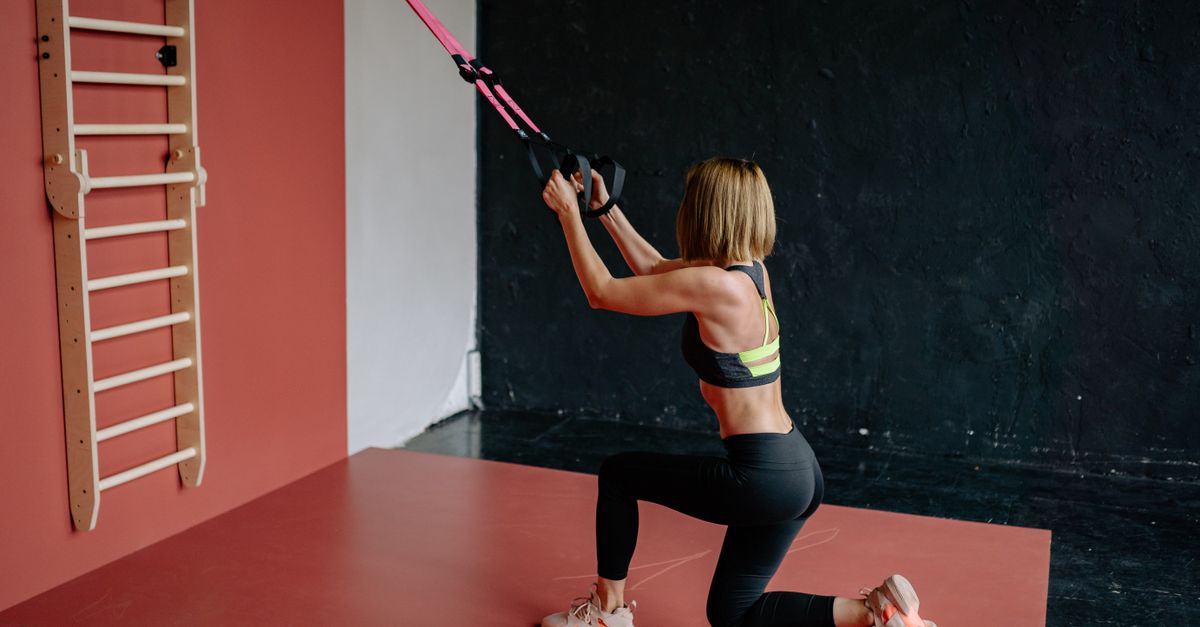
Ever walk into a packed gym after a long workday, look at the clunky weight machines, and just feel completely drained before you even lift a finger? You want a straightforward workout that hits every muscle, but you hate waiting in line or fiddling with rusty pins on iron stacks. That is where suspension straps come in to save the day. In this guide, you will learn how to unlock an entire full-body routine using just two hanging straps and your own body. We will break down the movements, show you how to tweak the intensity instantly, and give you a foolproof routine. By the time you finish reading, you will be ready to command the gym floor with total confidence.
The Magic of Two Hanging Straps
Picture the playground swings you loved as a kid. When you sit on a swing, your weight shifts, and you have to balance yourself so you do not tip over. A suspension trainer works almost the exact same way. It is just two heavy-duty straps anchored to a sturdy beam or wall, with handles on the ends. Instead of lifting a cold iron dumbbell, you lift yourself.
Because the straps move freely, your body has to work overtime. Tiny stabilizer muscles around your shoulders, hips, and knees wake up right away to keep you steady. It turns a regular exercise into a rich, three-dimensional movement that feels a lot more like real life than sitting on a padded bench ever could.
Shifting Your Feet to Shift the Weight
Changing weights on a normal barbell means walking back and forth to a rack, sliding heavy plates on, and locking them with clips. It takes time, and it can be a hassle. Suspension training throws that whole routine out the window.
Here, your feet are your dial. Let us say you are holding the handles and facing the anchor point to do a row. If you stand nearly upright, the move feels light and easy. Walk your feet forward so your body leans back like a ramp, and suddenly you are pulling a huge chunk of your body weight. You make an exercise harder or easier simply by moving your sneakers a few inches. No plates, no pins, and zero wasted time.
Bulletproofing Your Legs Without Heavy Barbells
Let us look at a quick fictional example. Imagine a guy named Dave. Dave wants strong legs, but heavy barbells give his lower back a rough time, and he is nervous about dropping into a deep squat. When Dave grabs the suspension straps, everything changes. The straps act like friendly training wheels. He can lean his weight back into his hips, take pressure off his knees, and squat down as deep as he wants without worrying about getting stuck at the bottom.
Once basic squats feel comfortable, you can step up the challenge with lunges and single-leg squats. By keeping light pressure on the handles, you build genuine leg power while feeling totally supported. It builds balance from your ankles all the way up through your glutes, keeping your joints happy along the way.
Upper Body Power: The Push and Pull
After your legs get going, it is time to move up to your back, chest, and arms. The beauty here is that you can switch between pulling and pushing in about three seconds flat.
To hit your back, face the anchor point, lean back with straight arms, and pull your chest toward your hands. Keep your body stiff like a wooden board. To flip the script and hit your chest, turn around so your back faces the anchor. Now, you are doing a suspended push-up in mid-air. Lower your chest down between the handles and press back up. Your shoulders and chest will feel a deep, clean stretch, and you will not have to worry about dropping a heavy bar on yourself.
The Stealthy Core Burn
Here is the coolest secret about using suspension straps: your abs never get a break. Every time you push, pull, or squat, your stomach muscles have to squeeze tight to keep your body from wobbling like a bowl of jelly.
Our team at Everyday Athletics helps folks simplify their routines every week, and we always point beginners toward suspension gear because it sneaks in core strength naturally. If you want an extra challenge, you can slip your toes into the foot cradles, get into a plank on the floor, and pull your knees into your ribs. It burns way more than traditional crunches, and it actually teaches your stomach muscles to protect your spine during everyday activities.
Building Your Express Circuit
Ready to put it all into action? You do not need to spend an hour wandering around the gym floor. You can link these movements into a smooth circuit that gets you sweating and out the door in under thirty minutes.
Run through this list back-to-back, resting for about thirty seconds between each move:
- Suspension Squats: 12 to 15 smooth repetitions to warm up the legs.
- Inverted Rows: 10 to 12 reps, keeping your elbows tucked close to your ribs.
- Suspended Chest Press: 10 to 12 reps, staying tight through your belly.
- Alternating Step-Back Lunges: 10 reps per leg, using the straps for light balance.
- Suspended Plank Hold: 30 seconds of pure, steady core control.
Catch your breath for two minutes after the plank, then repeat the whole loop two or three times. It is fast, engaging, and remarkably tough.
Mastering a full-body routine does not require an army of metal machines or racks filled with heavy iron. With a humble pair of suspension straps, you get to control your workout using the best tool you already own: your own body. You have learned how stepping forward or backward instantly dials the challenge up or down, how to fire up your legs, build upper-body strength, and sneak in serious core work all at once. Take this simple routine with you to the gym next time, find an open anchor point, and give it a shot. You will save time, dodge the crowds, and walk away with a rewarding, head-to-toe sweat that keeps you feeling fantastic all week long.