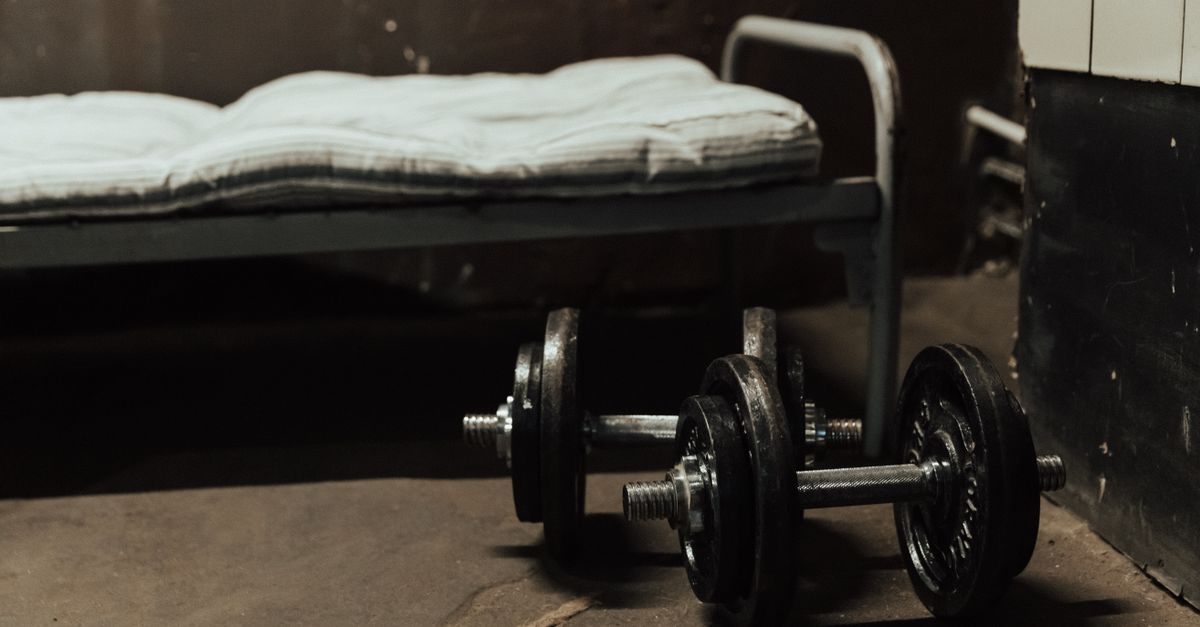
You set your alarm for 6:00 AM with every intention of crushing your leg workout, but life had other plans. You ended up staring at your ceiling until 2:00 AM, stressing over bills, work, or random chores. Now you are standing in the gym locker room, feeling like a zombie, wondering if you can still pull off a great session. We get it. Balancing daily life with fitness goals is tough. In this guide, we will walk you through what happens to your muscles, your brain, and your hormones when you train on empty batteries. You will learn why those weights feel like concrete, how sleeplessness slows progress, and smart moves to protect your hard work.
Your Internal Battery Never Fully Charges
Think about your cell phone for a second. If you plug it in for twenty minutes before leaving the house, you might get out the door with 18% battery. It turns on, and you can open a couple of apps, but you know it is going to die before lunch. That is exactly what happens to your muscles when you skimp on rest.
While you snooze, your body stores fuel inside your muscles called glycogen. This is your high-octane workout gas. Sleep also refills your supply of ATP, which is like the tiny spark plug inside every single muscle cell.
Let’s look at a fictional guy named Dave. Dave slept four hours, drank an energy drink, and tried to hit his normal bench press workout. On rep three, his arms started trembling like a washing machine off balance. His muscles literally ran out of juice because the storage tanks never filled up overnight. Caffeine tricked his brain into feeling awake, but his muscle cells were completely broke.
Your Brain Tricks You Into Thinking Weights Are Heavier
Here is a weird secret about lifting: your brain usually gives up way before your muscles actually fail. When you are well-rested, your central nervous system fires fast electrical signals that tell muscle fibers to pull together with massive force.
When you are running on empty, that communication line gets full of static. Scientists call this high perceived exertion. In plain English? Everything just feels twice as hard as it normally does.
Take a fictional lifter named Sarah. Last week, she breezed through squats with 135 pounds on her back while humming along to her headphones. Tonight, after staying up late finishing a school project, Sarah puts the exact same 135 pounds on her shoulders. Her knees feel wobbly, the bar feels like an anvil, and her brain screams at her to drop it immediately. The barbell didn’t secretly gain fifty pounds; her sleepy nervous system just could not process the effort comfortably.
Sloppy Form and the Hidden Danger of Getting Hurt
When your brain and muscles are fighting through that static, your physical coordination takes a huge hit. Think about how clumsy you get when you are tired. You bump your toe against the bedpost or drop your keys on the sidewalk. Now imagine doing that, but with heavy metal plates over your chest.
Lifting weights safely requires teamwork from dozens of tiny stabilizer muscles. These little helpers keep your joints locked in place while the big muscles do the heavy pulling. When sleep is low, those stabilizers check out early:
- Your shoulders drift forward during pull-ups.
- Your lower back arches out of shape during deadlifts.
- Your knees cave inward when you drop into a squat.
A single bad rep with twisted posture can turn a great workout into a nagging injury that keeps you stuck on the couch for two months. It simply is not worth the trade-off.
The Muscle-Building Factory Shuts Down
A lot of people think you build muscle at the gym. You don’t. At the gym, you actually tear your muscles down. You make tiny little micro-rips in the tissue. The magic only happens when you crawl into bed and fall into deep, quiet rest.
That deep rest triggers a massive wave of Human Growth Hormone. It is like an overnight repair crew that rushes into your muscles, patches up the tears, and builds them back thicker and stronger so they can handle more work next time.
Cut your rest short, and that repair crew never shows up. Even worse, your body starts pumping out a stress chemical called cortisol. Cortisol is like a wrecking ball that breaks down muscle tissue for fast energy and tells your belly to hang onto body fat. You end up breaking your body down in the gym without giving it the tools to rebuild.
The Mental Grit Melts Away Mid-Set
Fitness is as much a mental game as it is physical. To get stronger, you have to push through those uncomfortable burning feelings during the last two or three reps of a set. That requires pure willpower.
Sleep controls your mood, your patience, and your grit. When you are beat, your brain searches for the easiest way out. You will look at your workout sheet and suddenly find excuses to skip your last exercise. You will rack the weights early. You will rest on the bench for five minutes staring at your phone instead of getting back to work.
That is not because you are lazy. It is because the part of your brain that handles self-control is running on empty. You lose your competitive edge, and your drive to push limits disappears.
Making Smarter Choices on Bad Days
Look, life happens. Babies cry, work shifts change, and neighbors throw loud parties. Our crew here spends a lot of time helping people figure out how to stay healthy when real life gets messy, and the answer is rarely “just push through the pain.”
If you slept poorly, you do not have to skip the gym entirely, but you must play it smart:
- Drop the weight: Cut the pounds on the bar by 20% and focus on moving smoothly.
- Stick to machines: Cable towers and leg presses keep you locked in a safe path so you don’t drop anything.
- Shorten the trip: Hit two or three solid exercises, then pack up and head home to chill.
- Swap lifting for a walk: A brisk thirty-minute walk outside in the sun boosts your mood without chewing up your muscles.
Adjusting your plan is not quitting. It is playing the long game.
Skipping out on quality sleep does way more than make you yawn during warmups. It drains your cellular energy, makes moderate weights feel like giant boulders, and throws your balance right out the window. On top of that, your hormones flip into breakdown mode, and your brain begs you to quit sets early. Missing sleep turns a great training routine into an uphill battle. But one bad night does not mean your fitness journey is ruined. Listen to what your body tells you, back off the heavy weights when you are completely drained, and treat tonight’s bedtime like your most important set of the week. Rest up, recharge, and your next gym session will feel amazing.