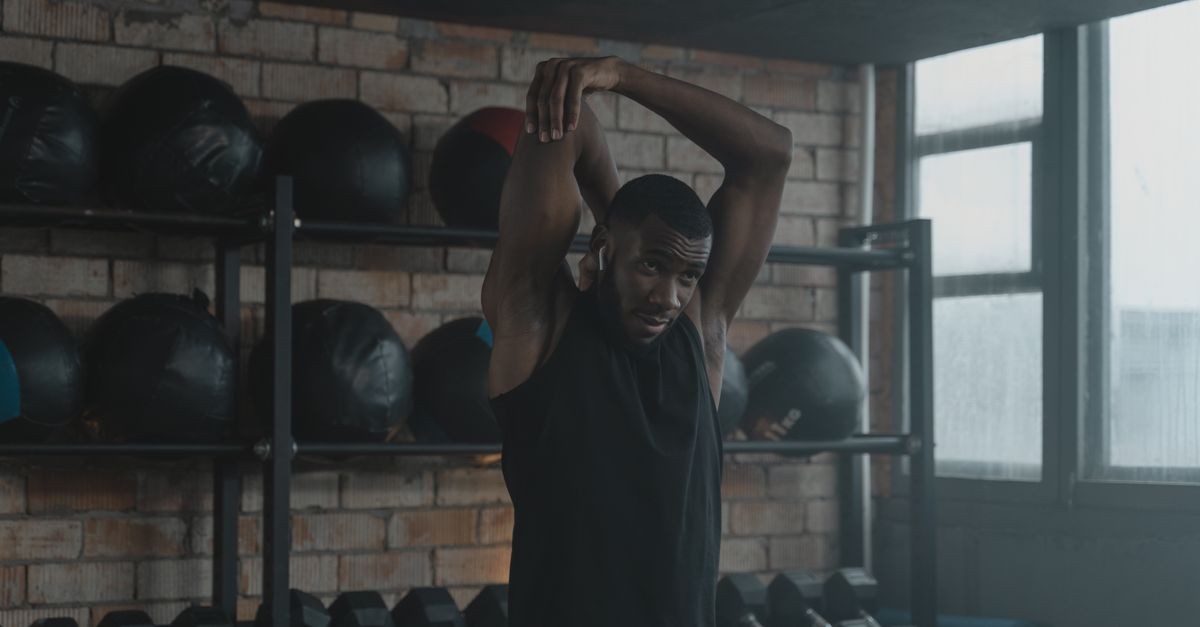
You hit the gym, crush your pushups, and curl dumbbells until your arms feel like jelly, but your arms still do not look or feel as strong as you want. It is easy to get frustrated when hard work does not show. Most people pour all their energy into their biceps, forgetting that another muscle group actually does most of the heavy lifting. This guide breaks down overhead triceps extensions, the secret weapon for building real upper-body power. You will discover why this movement works so well, how your muscles respond to it, and how to perform it without hurting your joints. By the end, you will know exactly how to use this exercise to build arms that are genuinely strong.
The Real Muscle Behind Bigger, Stronger Arms
Whenever people want to show off their strength, they pop a bicep. Pop culture taught us that the front of the arm is where all the power lives. In reality, your triceps make up about two-thirds of your upper arm. If you skip them, you leave most of your arm strength on the table.
Your triceps muscle gets its name because it has three parts, often called heads: the lateral head on the outside, the medial head down near the elbow, and the long head running up the back. While all three work together to straighten your elbow, the long head is by far the biggest. If you want arms that can push heavy doors, throw a ball with zip, or simply look solid in a t-shirt, you have to wake up that long head.
Why Lifting Overhead Unlocks Better Gains
Here is the tricky part about the long head of your triceps: it connects directly to your shoulder blade. The other two heads only connect to your upper arm bone. Because of that unique connection, the long head never fully stretches when your arm rests down by your side.
Think about a simple rubber band. If you hold it loose and flick it, you get almost no snap. But if you pull it back tight and let go, it snaps with plenty of force. Your muscles work in a similar way. When you lift your arm straight up past your ear, you stretch that long head to its limit. Lowering a weight behind your head from that position forces the muscle to work under deep tension. That extra stretch triggers new muscle growth and builds strength you simply cannot get from standard pushdowns.
Setting Up Your Body Without the Aches
Good form makes the difference between solid progress and sore joints. You can do this exercise standing or seated, but keeping your body steady is the number one priority.
Take a fictional lifter named Leo. Leo grabs a heavy dumbbell, sits on a bench, and immediately arches his lower back like a banana to press the weight up. By the third rep, his lower back hurts more than his arms. Leo made a classic mistake: he let his spine bend instead of letting his elbows do the moving.
To do it the right way, follow these simple cues:
- Sit tall on a bench with your feet planted flat on the floor.
- Pull your belly button in toward your spine to keep your ribs down.
- Raise your upper arms close to your ears, pointing your elbows toward the ceiling.
- Lower the weight behind your head by bending only at your elbows.
- Pause at the bottom for a split second, then push the weight back up until your arms are straight.
Picking the Best Tool for Your Workouts
You do not need fancy gym gear to reap the rewards of this move. Different tools give you slightly different benefits, so you can pick whatever fits your current setup.
Dumbbells are the classic choice. Holding one dumbbell with both hands lets you load up a decent amount of weight safely. If you have any wrist stiffness, holding two smaller dumbbells with palms facing each other gives your wrists room to move naturally.
Cables are another top-tier option. Free weights get lighter at the top of the movement because gravity pulls straight down, but a cable machine keeps steady tension on your triceps all the way through the rep. At our coaching space, we love using rope attachments on cables because they let your hands spread apart at the top for a crisp contraction.
Resistance bands work wonders when you exercise at home or while traveling. You can step on the middle of a loop band, pull the handles behind your neck, and press up against the rubber tension.
Mistakes That Quietly Steal Your Progress
Even with great effort, small errors can sneak into your sets and rob your triceps of work.
The most common slip-up is flaring your elbows out wide like chicken wings. When your elbows drift apart, your shoulders end up taking over the load. Keep those elbows tucked in relatively close to your head. They do not need to squeeze your ears, but they should point mostly forward rather than out to the sides.
Another issue is cutting the movement short. Half-reps give you half-results. If you only drop the weight a few inches, you miss out on the deep stretch where the real magic happens. Drop the weight down smoothly until your elbows make roughly a ninety-degree angle, then drive back up. Control the drop instead of letting the weight freefall behind your neck.
Fitting the Move Into Your Weekly Routine
You do not need to spend an hour every day blasting your arms to see great changes. Quality beats quantity every single time.
Try adding overhead triceps extensions to your routine two times a week. Place them right after your big compound lifts, like bench presses, overhead presses, or pushups. Since your triceps already helped out with those heavier moves, finishing them off with an overhead exercise ensures complete muscle stimulation.
Aim for three to four sets of ten to fifteen reps. Pick a weight that makes the last two reps feel challenging, but never so heavy that you lose your balance or turn into a human banana like Leo. Focus on feeling the muscle stretch on the way down and squeeze at the top.
Building strong, capable arms comes down to working the right muscles through their full range of motion. While curls and pressdowns have their place, overhead triceps extensions hit the largest part of your upper arm in a way nothing else can match. By setting your ribs, controlling your elbows, and choosing the right weight, you protect your joints while stimulating fresh muscle growth. Add this move to your training a couple of times each week, stay patient with your progress, and pay attention to clean form. Over time, you will feel the payoff in every push, press, and lift you tackle, walking away with arms that are built for both performance and everyday strength.