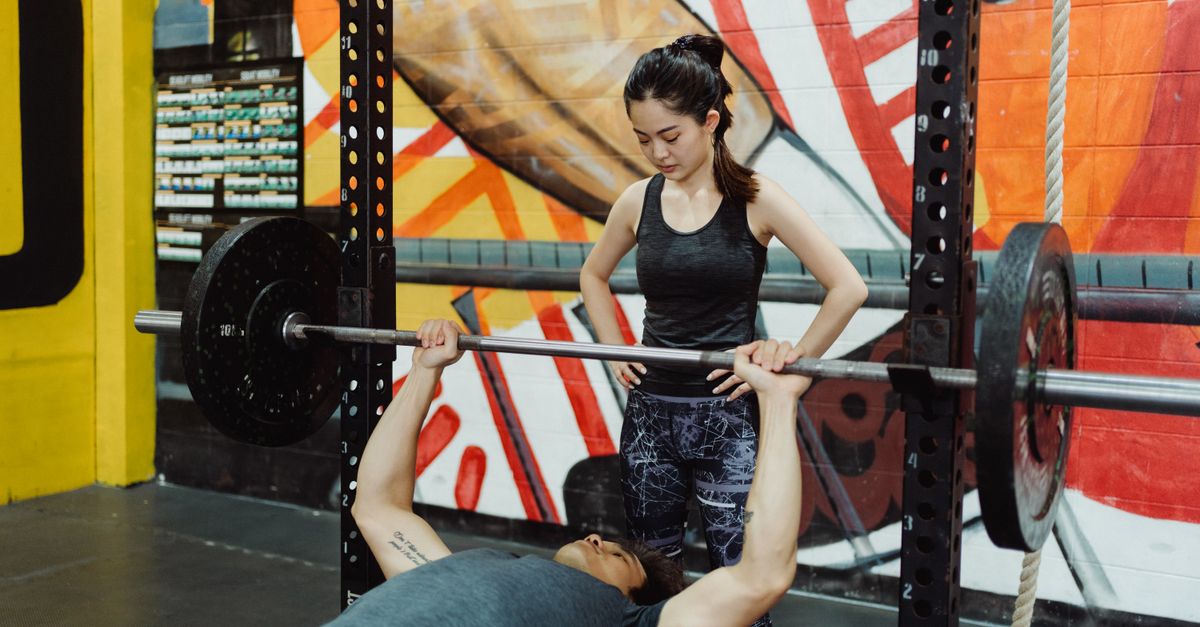
Picture this: You step into the weight room, queue up your playlist, and walk over to the barbell. You want to push yourself today, but a tiny voice in your head asks, What if I get stuck under this thing? Nobody wants to get pinned under cold steel, but walking up to a complete stranger to ask for help can feel super awkward. We’ve all been there. In this quick guide, you’ll discover the exact moments you truly need an extra pair of hands, when you can safely train alone, and how to steer clear of painful gym accidents. By the time you finish reading, you’ll know how to lift with zero fear, push your limits, and train smart.
The Classic Danger Zone: The Barbell Bench Press
The flat barbell bench press is the king of gym lifts, but it also causes the most blooper reels. Why? Because the weight hangs directly over your throat and chest.
If your arms give out on a squat, you can usually dump the bar behind you. On a bench press, you have nowhere to go. Let’s make up a quick scenario. Imagine a lifter named Leo. Leo is feeling brave and decides to try pressing 185 pounds without a partner. On rep four, his arms turn to jelly. The bar slowly sinks onto his ribs, and he has to do the embarrassing “roll of shame” across his belly to get free.
A spotter keeps Leo safe. They don’t lift the weight for you, but their fingers hover underneath the bar ready to pull it up if your arms give out. If you are benching heavy free weights, always grab a spotter.
Chasing a Brand-New Personal Record
Testing your max strength is a rush. When you step up to lift more weight than you’ve ever handled in your life, your body enters mystery territory.
You can’t really guess how your nervous system will handle a brand-new number. Maybe the bar flies up like a feather. Or maybe it feels like an oak tree glued to the floor. Having a spotter nearby gives your brain the green light to go all out. When you know someone is watching your back, you don’t hold back out of fear. You can attack the lift with 100% effort.
Pushing Your Sets Right to Muscle Failure
Sometimes you aren’t lifting super heavy, but you are lifting until your muscles literally cannot move the bar one more inch. Bodybuilders call this “training to failure.”
It sounds intense because it is. On rep eight, things feel fine. On rep nine, the bar slows down. On rep ten, your muscles simply quit. There is no warning shot. The fuel tank is just empty.
If your workout plan asks you to take a set to absolute failure on a barbell move, you need a partner. They aren’t there to steal your workout. They are there to catch the bar the exact second your muscles pull the plug.
Heavy Dumbbells and Tricky Starting Positions
People often forget about dumbbells. They think, Hey, if these get too heavy, I’ll just drop them on the floor!
That works sometimes, but heavy dumbbell presses can be really sneaky. The hardest part is often kicking the weights up from your knees to your shoulders. If your shoulder wobbles while you try to lie back, a heavy dumbbell can pull your arm backward in a nasty twist. A good spotter stands behind you and guides your elbows into place. Once you’re safely in position, you can press away without blowing out a shoulder.
Squat Racks: When the Metal Pins Aren’t Quite Enough
Modern squat racks come with metal safety bars, and they do a killer job saving lifters every day. But metal pins don’t talk.
Here’s the difference: A steel pin catches the bar after you drop it, but a human spotter keeps you from dropping it in the first place. When you squat super heavy, a spotter stands right behind your hips, moving with you like a shadow. If you get stuck halfway up, a light touch on your torso can help you push past that sticky spot so you can stand up tall. Our team at IronPulse Fitness always reminds folks that safety pins save your life, but spotters save your form.
Times You Should Never Use a Spotter
Believe it or not, asking for a spot on certain lifts is actually dangerous for both of you. You should skip the spotter on:
- Deadlifts: If the weight gets too heavy, just open your hands and let it hit the floor. Trying to spot someone on a deadlift puts the helper’s lower back in a terrible spot.
- Power Cleans or Snatches: These moves are way too fast. If a lift goes sideways, get out of the way. A helper trying to grab a flying bar will only get hurt.
- Bicep Curls: Unless your buddy is just cheering you on, nobody needs to help you curl twenty-pound dumbbells.
Knowing when not to ask saves you from looking goofy and keeps your fellow gym-goers safe.
How to Ask for Help Without Feeling Weird
Asking a stranger for a spot can feel intimidating, but almost everyone in the gym is happy to help if you ask nicely. Just wait until they finish their set, walk up, and keep it quick.
Tell them three simple things before you touch the bar:
- How many reps you plan to do.
- Whether you need a “lift-off” out of the rack.
- When to touch the bar (for example: “Only touch it if it starts going down instead of up”).
Clear communication means zero awkward mix-ups. You stay safe, your helper knows what to do, and you might even make a new gym buddy in the process.
Lifting weights is one of the coolest ways to build strength and feel unstoppable, but staying safe should always be your top priority. You don’t need someone hovering over you for every single bicep curl or leg press. Save your requests for the moments that truly count, like heavy bench presses, new personal records, or wild sets pushed right to absolute failure. When you do ask for a hand, just keep it simple, talk through your plan, and return the favor if someone asks you. Staying safe isn’t about being nervous; it is about respecting the iron and training smart. Now grab your water bottle, head out there, and lift with absolute confidence!