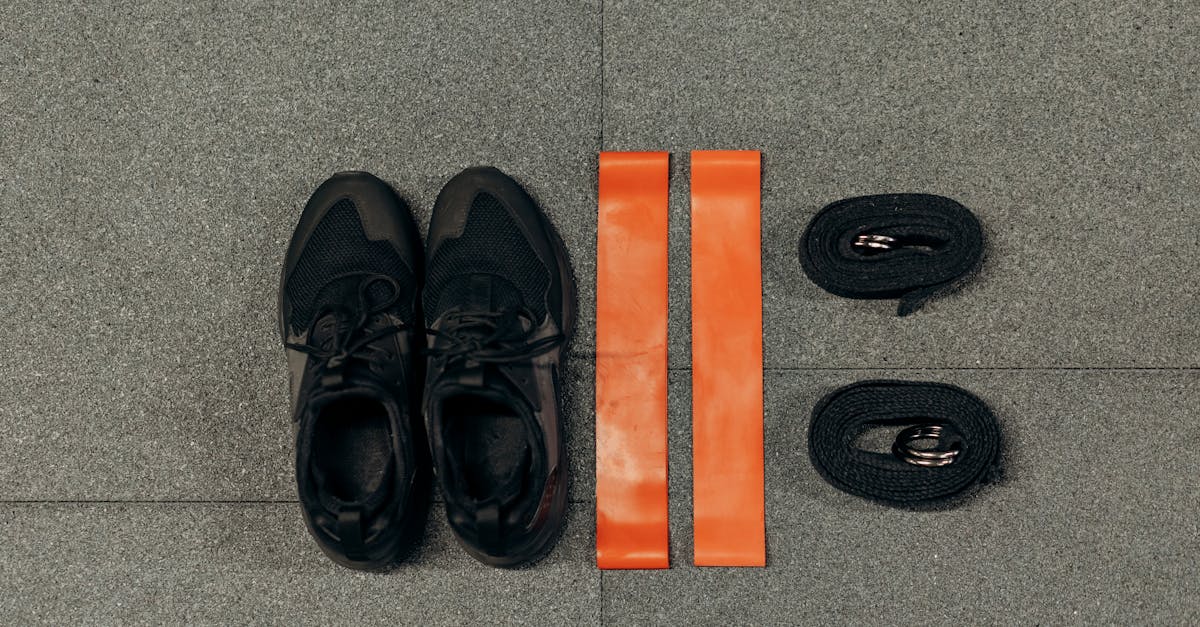
You walk into the gym, ready to crush your workout, but every bench is taken, and your shoulders already feel stiff from sitting at a desk all day. You notice a bucket of colorful rubber bands sitting in the corner. Are they just for physical therapy, or do they actually belong in a real strength routine? If you have ever wondered whether those stretchy loops can genuinely help you build muscle or if they are just a waste of time, you are in the right spot. In this guide, we will break down exactly where resistance bands fit into your gym sessions. By the time you finish reading, you will know how to use them to lift heavier, protect your joints, and save precious time on crowded days.
Waking Up Sleepy Muscles Before the Heavy Stuff
Picture a fictional guy named Leo. Leo sits in an office chair for eight hours, drives forty minutes to the gym, and immediately puts two hundred pounds on a barbell to squat. His hips are tight, his lower back is mad, and his glutes are basically on airplane mode. Jumping straight into heavy lifting without prepping your body is like trying to drive a sports car in the dead of winter without letting the engine warm up first.
This is where resistance bands shine brightest. You do not need heavy iron to tell your nervous system to wake up. Throwing a mini-band around your knees for twenty lateral monster walks fires up the small stabilizer muscles in your hips. Doing a few banded face-pulls gets the small muscles around your shoulder blades ready for heavy bench presses.
Bands provide a smooth, low-impact way to get blood flowing right into the tendons and joints without tiring you out before the main event. You want warm muscles, not worn-out muscles, before your big sets.
The Secret Superpower: Changing Tension
Free weights like dumbbells and barbells have a major limitation: gravity only pulls down. If you hold a twenty-pound dumbbell in your hand, it feels just as heavy at the bottom of a bicep curl as it does at the middle. But your human joints do not work in straight lines; they work in leverage curves. You are naturally weaker when your elbow is fully open and stronger as you pull the weight halfway up.
Bands work completely differently because they rely on elastic tension, not gravity. The more you stretch a rubber band, the harder it fights back. That means:
- The exercise gets harder at the exact spot where your body is strongest.
- The resistance stays lighter where your joints are most vulnerable.
- Your muscles must stay locked in during the entire movement, with no coasting allowed.
You cannot cheat by using momentum with a band. If you yank it quickly, it snaps right back, forcing you to control every single inch of the repetition.
Teaming Up Bands with Heavy Iron
Now that you know how that elastic tension works, you do not have to pick between bands and free weights. You can marry them together. Advanced lifters have done this for decades, and our team loves setting this up because it teaches your body to explode through sticking points.
Let’s take a hypothetical lifter named Maya who wants to squat three hundred pounds. Maya always gets stuck about halfway up out of the hole. When she loops heavy bands to the bottom of the squat rack and attaches them to the ends of her barbell, something wild happens. At the bottom of the squat, the bands go slack, so she only lifts the bar weight. As she stands up and enters her strongest zone, the bands stretch tight, adding thirty extra pounds of force.
This forces Maya to push as hard and fast as she can all the way to the top. Adding bands to barbells teaches your brain to accelerate through the sticky parts of a lift instead of slowing down.
The Friendliest Spotter for Bodyweight Moves
Pull-ups and dips are incredible for building back and chest size, but they can feel brutal if you cannot do a single one yet. For a long time, the only options were clunky counter-weight machines or having a workout buddy grab your feet.
Bands solve this problem cleanly. Loop a long band over the top of a pull-up bar, step your foot or knee into the bottom loop, and grab the bar. Think of the band as a giant, quiet helper. At the very bottom of the hang, where your arms are straight and you are at your weakest, the band stretches out long and gives you the biggest boost upward. As your chin clears the bar, the band shortens, meaning your own muscles do more of the work at the peak.
You can gradually move down to thinner bands over several weeks until you are doing pull-ups completely on your own.
Saving Your Joints During the Final Burnout
Toward the end of a hard gym session, your brain gets tired, and your form starts to wobble. Trying to hit heavy dumbbells for one last set when you are exhausted is usually how people tweak an elbow, a knee, or a rotator cuff.
Bands are the king of safe finisher sets. When your main lifts are done, you can grab a band to chase that deep muscle pump without beating up your cartilage. If your muscles give out completely while doing banded tricep pushdowns, you don’t drop a heavy metal block on your toes. The band simply pulls your hands back up.
You can do sets of twenty, thirty, or even fifty reps to push fresh, nutrient-rich blood straight into your muscles. It sparks new growth while letting your beat-up joints breathe easy.
Beating the Crowded Gym Rush
Picture the gym floor at 5:30 on a Monday evening. Every machine has a line, the dumbbell racks look like a hurricane hit them, and you only have forty-five minutes before you need to head home for dinner.
Keeping a couple of loop bands in your gym bag rescues your workout from the crowd. Instead of waiting ten minutes for a cable crossover station to open up, you can anchor a band to any sturdy upright pole and knock out your chest flyes right next to your bench. You can create quick supersets—pairing a heavy barbell row with banded face-pulls without leaving your little five-foot square of space.
You keep your heart rate up, save yourself from standing around waiting, and finish your routine on your own schedule.
Wrapping It Up
Resistance bands are not just stretchy toys meant for gentle stretching or therapy clinics. When you look at how they actually work, they belong in every single phase of a gym routine. They wake up sleepy joints before you touch a barbell, teach your body to explode through stubborn sticking points, help you master hard bodyweight moves, and give you a killer muscle pump without beating up your tendons. Plus, they make packed gym hours way easier to manage. You do not need to ditch the free weights or give up your favorite machines. Just grab a band, weave it into your regular sets, and watch how much better your body moves and feels.