You walk into the gym ready to build strength, stare down a loaded barbell, and suddenly freeze. You know you need to deadlift, but should you pull straight off the rubber floor or start upright with a Romanian deadlift? It is easy to feel confused when two popular exercises share almost the same name. If you pick the wrong one for your personal targets, you might miss out on building the strength you want or end up with an aching lower back. We are going to unpack both movements step by step so you see how they work, where you will feel the burn, and how to lift safely. By the end, you will walk up to that bar with total confidence.
Starting From Scratch: Ground Up vs. Top Down
The biggest difference you will notice right away is where the bar begins. With a standard deadlift, the weight rests flat on the floor between every single repetition. That is actually why people call it a dead lift—the bar starts from a completely dead stop. You bend down, grip the metal, brace your stomach, and push the floor away to stand up tall.
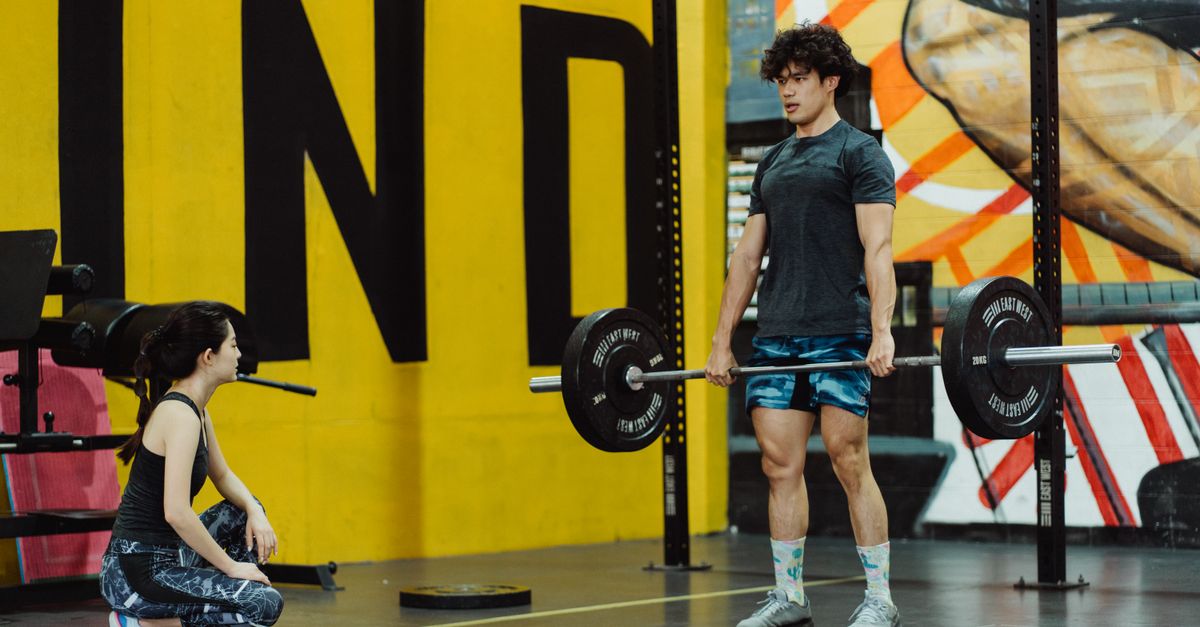
The Romanian deadlift, which most people call the RDL, flips this script entirely. You do not start from the floor for each rep. Instead, you pick up the bar, stand up straight, and begin the movement from the top. You lower the barbell along your thighs until you feel a deep tug along the back of your legs, and then you snap back up. The plates never touch the floor until your entire set is done.
The Car Door Trick: Understanding the Hip Hinge
To really get why these lifts feel so different, you have to look at your hips. Both moves rely on something coaches call a hip hinge. If you have ever carried four bags of groceries and had to shut your car door with your butt, you already know how to hinge. You push your hips straight backward while keeping your chest proud.
In the RDL, this backward hip push is the entire show. Your hips slide back as far as they can go, stretching the muscles like big rubber bands. In a standard deadlift, you still hinge, but you also drop your hips lower toward the ground. That lower hip position changes the whole angle of your torso, turning the movement into a blend of a hinge and a knee bend.
Shin Angles and Knee Bends: What Your Legs Are Doing
Take a look at someone’s shins while they lift, and you will instantly know which exercise they are doing. During an RDL, your knees bend just a tiny bit, and then they lock into that soft angle. Your shins stay almost straight up and down, like tree trunks planted in the dirt. Because your shins do not slide forward, the bar stays glued close to your legs.
A standard deadlift is completely different. Because the bar sits on the floor, your knees have to bend a lot more to let you reach it. As your knees bend, your shins tilt forward until they lightly graze the knurling on the barbell. That extra knee bend brings a totally different group of muscles to the party.
The Muscle Lineup: Full-Body Power vs. Targeted Stretch
Because your joints move through different angles, your body relies on different muscle groups for each lift. When you want to target specific areas, this detail matters a lot:
- The Romanian Deadlift: This lift focuses almost entirely on your posterior chain—the fancy name for the muscles running down your backside. It zeroes in on your hamstrings and your glutes. Your lower back works hard to keep your spine straight, but your hamstrings take the brunt of the work as they stretch under load.
- The Standard Deadlift: This is a whole-body powerhouse lift. Because your knees bend more, your quads (the front of your thighs) do heavy lifting to shove the floor away. At the same time, your upper back, lats, grip, core, glutes, and hamstrings all fire at once to pull the load up.
Weight on the Bar: Pure Strength vs. Muscle Control
If you want to move the heaviest weight possible, the standard deadlift wins every time. You get to recruit your quads, hips, and back all at once, giving you maximum leverage to yank serious iron off the ground. It is an amazing test of raw, stubborn power.
The RDL is not about setting world records for weight. Because your knees stay soft and your hamstrings take almost all the strain, you must use lighter loads. If you try to go too heavy on an RDL, your lower back will try to take over, which ruins the exercise and leaves you sore in the wrong spots. With the RDL, slow control and a big stretch matter far more than the number stamped on the plates.
A Tale of Two Lifters: Maya and Leo
To see how this plays out in real life, imagine two fictional lifters, Maya and Leo, who drop by our training space with very different goals. Leo plays weekend rugby and wants to tackle harder and run through opponents. He needs explosive, raw power from head to toe. For Leo, the conventional deadlift is king because it teaches his entire body to generate force from a dead stop.
Maya, on the other hand, works at a desk all day. Her glutes feel sleepy, her hamstrings feel tight, and she wants to build muscle tone along the back of her legs while fixing her posture. Heavy pulls from the floor leave her back cranky. We set Maya up with RDLs using modest dumbbells, focusing on pushing her hips back and feeling that hamstring stretch. Within weeks, her posture improves and her legs feel strong without any lower back ache.
Fitting the Moves Into Your Routine
You do not have to pick just one of these lifts and throw the other away. They actually team up really well if you put them in the right spots in your schedule:
- Put standard deadlifts at the very start of your workout when your central nervous system is fresh and energized. They drain a lot of fuel, so you want full focus.
- Use Romanian deadlifts as an accessory lift later in your session, or plug them into a dedicated leg day to isolate your glutes and hamstrings after your main heavy lifts are done.
- If you struggle with lower back stiffness, switch to RDLs with dumbbells for a few weeks to build control before pulling heavy from the floor again.
Both the standard deadlift and the Romanian deadlift deserve a spot in your toolbox, but they serve different jobs. The regular deadlift builds raw, whole-body power from the ground up, demanding plenty of energy and moving heavy iron. The Romanian deadlift locks in on your hamstrings and glutes through a deep, controlled stretch without letting the bar touch down. Neither exercise is better than the other; your pick simply comes down to what you want to achieve today. Try cycling both through your weekly workouts, pay close attention to your hinge, and enjoy watching your strength and posture level up week after week.