You’re standing in the middle of a busy gym, looking back and forth between the shiny rack of dumbbells and the long, classic barbell. You want boulder shoulders and real functional strength, but you don’t want to mess up your joints or waste months on the wrong lift. Which one actually gives you the best bang for your buck? It’s an age-old debate that trips up beginners and seasoned lifters alike. In this guide, we’ll break down the real differences between overhead pressing with dumbbells versus a barbell. You’ll learn how each affects your muscles, which keeps your joints happier, and how to pick the right weapon for your goals so you can lift with total confidence.
The Classic Barbell: Moving Heavy Iron
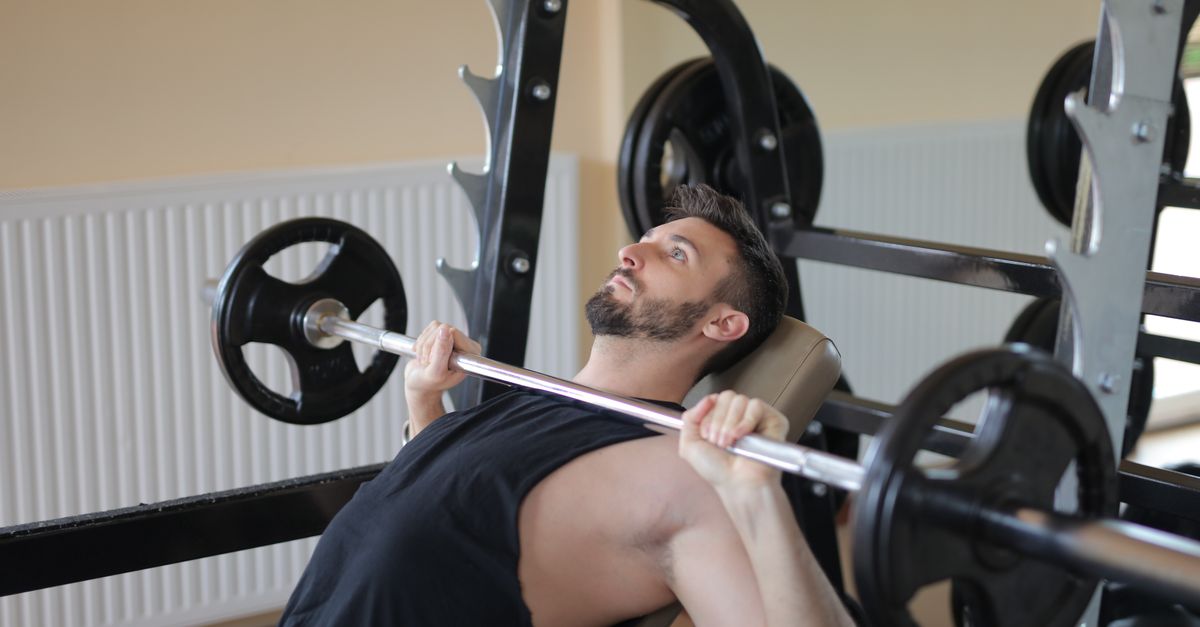
There is something undeniably cool about sliding heavy metal plates onto a barbell, stepping under it, and launching it straight up toward the ceiling. The barbell overhead press is the king of raw upper-body power. Because both hands are locked onto a single, solid bar, your body can coordinate its balance more efficiently. This lets you push significantly heavier loads than you ever could with two separate weights.
When you want pure strength, the barbell is tough to beat. It demands full-body tension from your heels all the way through your palms. But there’s a small catch. A barbell locks your hands and wrists into a single, rigid path. Your shoulders must bend to the bar’s rules, whether your joints like that path or not.
Dumbbells: Letting Your Joints Move Free
Dumbbells don’t trap you. Since each hand holds an independent weight, your arms can move in a natural arc that matches your unique skeleton. Think of it like walking down a wide open hallway instead of crawling through a narrow tube.
With dumbbells, you can rotate your wrists as you press. You can start with your palms facing your face and turn them forward at the top, or keep them facing each other the whole time. This freedom takes a massive amount of pinching pressure off your rotator cuffs. If your shoulders snap, crackle, or pop when you press, switching to dumbbells often feels like night and day. You sacrifice a little bit of total weight, but your joints will thank you for it later.
The Sneaky Trouble with Muscle Cheating
Picture a fictional gym-goer named Leo. Leo loves the barbell and has been pressing with it for six months. Lately, though, he noticed that his right arm always locks out a split second before his left. Without even realizing it, his stronger right side has been doing 60% of the work, while his left side merely tags along for the ride.
This is where dumbbells show their true genius. They are completely honest:
- Each arm has to carry its own weight.
- The strong side can’t swoop in and rescue the weak side.
- Both sides get an equal chance to grow and balance out.
If your left arm quits at rep eight, you’re done. Dumbbells expose your weak spots instantly and force your body to build real, balanced strength.
How Each Tool Challenges Your Core
A lot of people think overhead pressing is just an arm workout. It isn’t. The second you push weight above your head, your spine wants to bend backward like an archery bow. Your abs and lower back have to clamp down hard to keep you straight and safe.
The barbell demands brute force trunk stability. You squeeze your glutes, lock your ribs down, and turn your torso into a tree trunk. Dumbbells, though, bring a different kind of chaos to the party. Because two separate weights are wobbling around up in the air, thousands of tiny stabilizer muscles in your upper back and core have to fire nonstop. At our training desk, we love seeing folks discover that lightweight dumbbells can leave their midsection shaking just as hard as a heavy barbell.
Shoulder Health and Real-Life Mobility
Not everyone can raise their arms straight over their ears without arching their lower back. Try it right now. If your chest flares way out or your shoulders feel tight, forcing your hands onto a straight barbell might lead to cranky tendons.
Dumbbells let you work around those tight spots. You can press slightly forward, adjust your elbow angle, and find a sweet spot that feels completely pain-free. If you sit at a desk all day and fight stiff posture, dumbbells give you the gentle runway you need to build overhead strength without irritating your shoulders.
The Verdict: How to Pick Your Tool
So, which one belongs in your workout? It really boils down to what matters most to you right now:
- Pick the barbell if your main goal is pushing the heaviest weight possible, competing in strength sports, or getting pure athletic power.
- Pick dumbbells if you want to build balanced muscle, keep your joints healthy, or work around past shoulder aches.
The best part? You don’t actually have to pick just one forever. You can easily press a barbell for a few months to build heavy strength, then switch over to dumbbells to polish off imbalances and give your joints a breather.
When the dust settles, neither the barbell nor the dumbbell wins the crown outright. The barbell is your best buddy if you want to pile on heavy plates, build pure, raw power, and turn heads with a big lift. Dumbbells, on the other hand, look out for your joints, fix hidden strength gaps, and allow your body to move the way it was designed to move. You don’t even have to marry just one. Cycling between the two gives you the ultimate mix of raw strength, injury resilience, and solid muscle growth. Take a close look at your own goals, test both styles on your next shoulder day, and stick with what makes your body feel unstoppable.