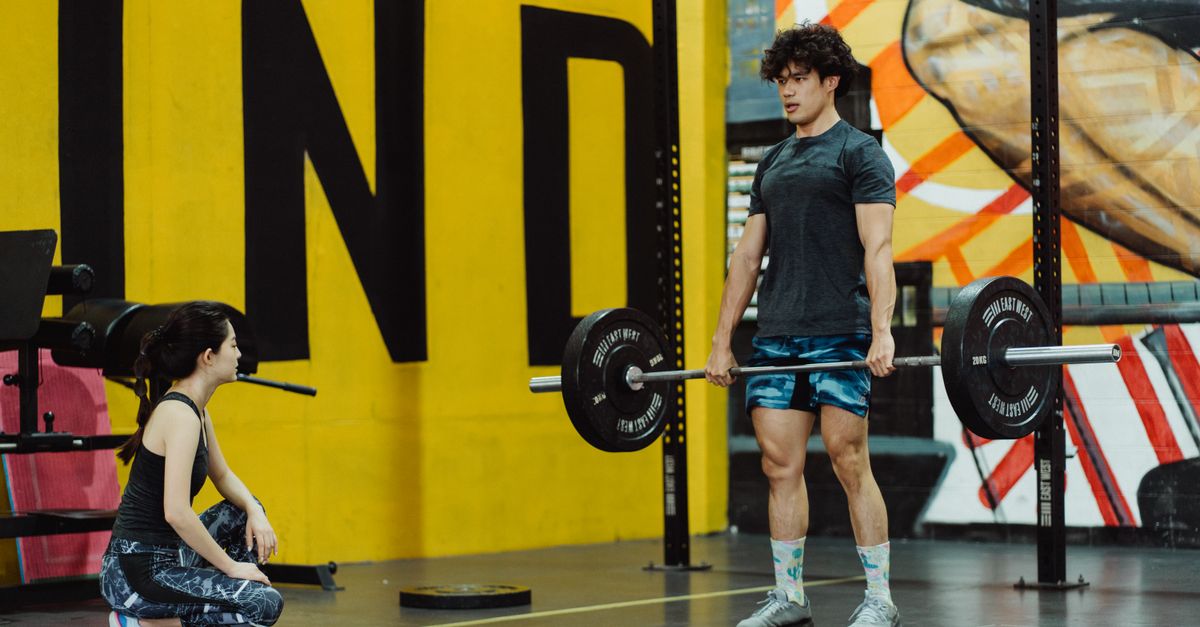
You walk up to a loaded barbell, get your hands set, pull hard, and instantly feel an angry pinch in your lower spine. If you want to build raw strength without throwing your back out for a week, you’re not alone. Deadlifts are incredible for building real power, but jumping straight to the bar without mastering the movement pattern underneath is asking for trouble. In this guide, you’ll discover the foundation of every safe pull: the hip hinge. We’ll show you how to tell a hinge from a squat, how to cue your body correctly, and a few easy drills you can test at home today. By the end, you’ll lift heavy without fear.
Squatting vs. Hinging: The Groceries in the Car Test
Picture this fictional scenario. You walk up to your car holding four heavy grocery bags in your arms. Your hands are completely full, and you need to push the car door shut behind you. You don’t drop straight down toward the pavement like you’re sitting in a tiny chair. If you did, your knees would bump the bags and you’d lose your balance. Instead, you push your butt straight back to bump the door closed. That simple motion is a hip hinge.
A squat moves your body up and down, bending heavily at your knees and your ankles. A hip hinge moves your hips backward and forward, while your shins stay mostly straight up and down. When people confuse these two moves, deadlifts turn messy fast.
Why Your Lower Back Takes the Hit
What happens when you skip that backward hip shift? Your body still has to reach the floor somehow. If your hips don’t travel back, your spine bends forward like a wet noodle to cover the distance.
The small muscles along your spine simply aren’t designed to hoist heavy loads all by themselves. They are stabilizers, not cranes. When you hinge, your hips act like a heavy-duty steel hinge on a bank vault door. All the brutal strain shifts away from your lower spine and lands right into your glutes and hamstrings. When our team talks with lifters who complain about aching backs, nine times out of ten, their spine is trying to do a job their hips should be handling.
The Wall Tap Drill to Teach Your Body
You don’t need any weights to teach your brain this movement. Stand about a foot away from an empty wall with your back turned to it. Keep your feet shoulder-width apart, and keep your chest proud like you’re showing off a logo on your shirt.
Softly unlock your knees. Don’t squat, just keep them from being stiff as boards. Now, push your butt backward until your pockets lightly tap the drywall behind you. If your knees shoot forward over your toes, reset and try again. Once you tap the wall easily, take a tiny step forward and reach back for it again. You’ll quickly feel your body learn to move through space horizontally rather than sinking down vertically.
The Broomstick Check for a Flat Spine
Once your hips travel backward properly, your spine needs to stay locked in a solid, neutral line. You can test this in your living room with a simple broomstick. Hold the stick behind your back along your spine. Grab it with one hand behind your neck and the other hand in the small of your back. The stick should touch three spots at the same time:
- The back of your head
- Your upper back between your shoulder blades
- Your tailbone
Try that same hip hinge while holding the stick in place. If the stick peels away from your tailbone or your head, your back is curving. Keep all three points touching the wood the entire time you hinge. It gives you instant, honest feedback without needing a coach standing right in front of you.
Feeling the Hamstring Rubber Band
How do you know you’re hitting the sweet spot during this movement? You listen to the back of your legs. Think of your hamstrings like thick rubber bands stretching from your sit bones down to your knees.
As your hips slide back, those rubber bands should pull tight. By the time your chest points toward the floor, you should feel a distinct, deep stretch across your backside. If your legs feel loose or your knees slide forward, you’ve slipped back into a squat. Once you reach that tight stretch, squeeze your glutes hard and push your hips forward to stand tall again. That tension is pure stored power.
Taking the Hinge to the Barbell
Once your body moves naturally without weight, stepping up to a barbell stops feeling intimidating. You don’t have to guess where your body should go. You walk up, place your feet under the bar so the metal cuts right across your shoelaces, and push your butt back toward the imaginary wall.
Your hands grip the bar, your shins stay vertical, and your back stays flat just like the broomstick drill showed you. You load tension into your hamstrings like coiled springs. You don’t pull with your arms or yank with your lower back. You drive your feet through the floor and push your hips forward. Suddenly, that scary pull turns into the smoothest, most powerful lift you have.
Deadlifts shouldn’t feel like a coin toss between building strength and hurting your back. Everything changes when you stop yanking with your spine and start using your hips like the powerful hinges they are. Remember the simple cues: send your butt back like you’re bumping a car door, keep your shins vertical, and find that solid stretch in your hamstrings before you lift. Using simple tools like wall taps and a basic broomstick drill lets you master the mechanics safely before adding iron. At our gym, we see people transform their lifting every single day just by dialing in this one essential move. Treat your hips like your engine, stay patient, and enjoy your next pain-free pull.