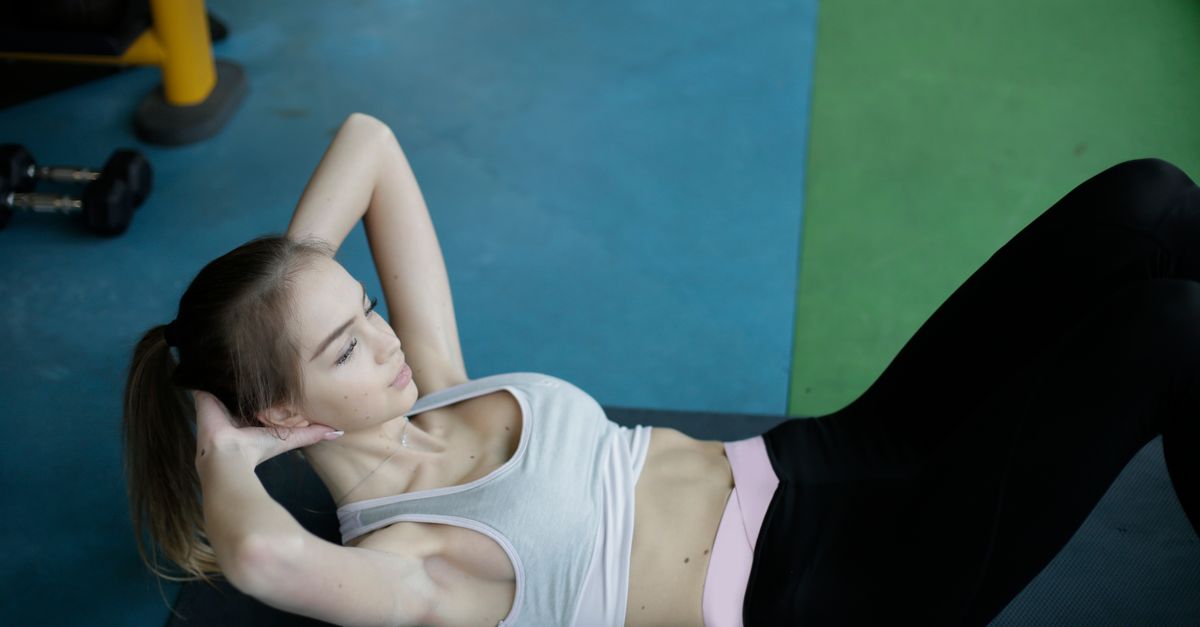
You drag yourself to the gym, lie down on a sticky mat, and knock out fifty crunches. Ten minutes later, your neck aches, your lower back feels pinched, and your belly doesn’t feel any stronger. You want a rock-solid midsection that helps you lift heavy things, run around with ease, and look great, but the classic crunch just leaves you beaten up. It is a frustrating spot to be in. In this guide, we will break down the smartest gym movements that build genuine core power without bending your spine into a pretzel. You’ll learn how your abs truly work, pick up new gym tricks, and leave with a bulletproof midsection that keeps you feeling awesome every single day.
Why Your Spine Hates Endless Crunches
Think of an unopened soda can. It is strong enough that an adult can stand on it without crushing the metal. But if you take an empty can and bend it back and forth over and over, the metal quickly snaps in half.
Your spine works a lot like that can. It is built to keep you upright, strong, and stable. When you do hundreds of crunches, you bend and fold your spine over and over. That puts a lot of stress on your lower back discs while doing very little for the muscles you actually want to show off. Your core muscles aren’t meant to act like an accordion. Their real job is to act like a sturdy wooden shield, locking your body tight so you don’t collapse when life throws something heavy your way.
The Deadbug: Building Your Shield on the Floor
Before you run off to grab heavy weights, you have to teach your ribs and pelvis to talk to each other. The deadbug sounds silly, but it is one of the best ways to wake up your deep abdominal wall without beating up your neck.
Lie flat on your back with your arms pointing straight up at the ceiling and your knees bent at ninety degrees, like an upside-down tabletop. Press your lower back into the floor so hard that nobody could slide a piece of paper underneath you. From there, slowly lower your right arm behind your head while kicking your left leg out straight.
- Keep that lower back glued down the whole time.
- Don’t let your ribcage pop open like an umbrella.
- Pull your arm and leg back up slowly, then switch to the other side.
Moving your arms and legs while keeping your belly completely still trains your body to stay stiff when outside forces try to bend you.
The Pallof Press: Resisting the Twist
Imagine a fictional scenario where someone is walking a big, enthusiastic golden retriever named Buster. Buster sees a squirrel and suddenly lunges to the right. If the walker has a weak core, they get yanked right off their feet. If they have strong anti-rotation muscles, their stomach stays firm, their feet stay planted, and Buster stops right in his tracks.
That is where the Pallof press comes in. Hook a handle to a gym cable tower around chest height. Stand sideways to the machine, hold the handle with both hands right against your chest, and step away so there is tension on the cable. Set your feet shoulder-width apart, brace your belly, and press the handle straight out in front of you.
The cable will try to twist your torso toward the machine. Your only job is to say, no way. Fight the pull, hold your hands out for two slow seconds, and bring them back to your chest. At our training company, this is always one of the first movements we show people because it fixes nagging back twinges fast.
Farmer’s Carries: Real-World Power
Building a great core does not mean you have to lie down on the floor. In fact, standing up and moving is way better. Enter the farmer’s carry.
Grab a pair of heavy kettlebells or dumbbells. Stand tall, pull your shoulder blades down into your back pockets, and walk forward in a straight line with slow, deliberate steps. You don’t want to shuffle or rush. You want to look like a soldier marching on parade.
Every step forces your side abs, hips, and lower back to lock down so you don’t wobble. If you want an even wilder challenge, carry just one heavy weight in one hand. Walking with a single weight forces the opposite side of your torso to work overtime just to keep you from tilting like the Leaning Tower of Pisa.
Hanging Knee Raises: Freeing Your Back
Crunches squash your spine, but hanging from a bar actually pulls it open and lets it breathe. That gentle stretch feels great, especially if you spend your workday sitting in a chair.
Jump up and grab a pull-up bar with an overhand grip. Let your body hang completely straight. Before you lift your legs, squeeze your shoulder blades slightly so you aren’t just dangling on your joints. Then, roll your pelvis up and pull your knees toward your chest.
Here is the trick: do not swing. If you look like you are on a playground swing set, you are using momentum instead of muscle. Lift your knees with control, pause for a beat at the top, and lower them slowly until your body is still.
The Ab Wheel Rollout: The Ultimate Test
Once you have nailed down basic stability, it is time to try the toughest tool in the gym: the ab wheel. It looks like a toy, but it will humble even strong gym regulars.
Kneel on a soft pad with the wheel right below your chest. Squeeze your butt, tuck your tailbone slightly, and round your upper back just a tiny bit. Slowly roll the wheel forward, extending your arms out in front of you. Go only as far as you can without letting your lower back sag like a swayback horse.
The moment you feel your lower back pinch, you went too far. Squeeze your stomach, pull the wheel back under your chest using your abs, and repeat. Start with short distances. Master the control first, and you will build ironclad abs without ever doing a crunch again.
Building a powerful midsection doesn’t mean you have to lie on a gym mat and curl your spine until your neck gives out. Real core strength is about fighting off unwanted movement, protecting your lower back, and staying rock-solid whether you’re lifting weights or carrying a trunk full of supplies. By swapping out old-school crunches for deadbugs, Pallof presses, heavy carries, hanging knee raises, and ab wheel rollouts, you train your body to work as a single, tough unit. Next time you head into the gym, skip the floor mats, grab a cable or a pair of heavy weights, and try these out. Your back, your posture, and your overall strength will thank you down the road.