If you have ever stared at the gym floor wondering whether to drop down for a set of crunches or hold a miserable sixty-second plank, you are not alone. Most of us just want a stronger stomach, less back pain, and a body that holds up when carrying heavy grocery bags up three flights of stairs. But with so much conflicting fitness advice floating around, it is hard to tell which move actually delivers results without wrecking your spine. In this guide, we will break down the exact muscles planks and sit-ups target, how each move works in the real world, and how to pick the right one for your goals. By the end, you will know exactly how to spend your workout time wisely.
The Core Is Much Bigger Than Just Your Abs
Most folks think of their core as just the front ripples of a six-pack. In reality, your core is more like a thick leather corset wrapped around your entire midsection. It includes your front ab wall, the side muscles called obliques, the deep stabilizing muscles underneath, and even the muscles running along your spine and hips.
Think of your torso like an aluminum soda can. The top is your diaphragm, the bottom is your pelvis, and the round sides are your core muscles. If that can is full and sturdy, you can step on it without crushing it. But if the sides are weak, it crumples instantly under pressure. Understanding this difference changes how you look at ab workouts forever, because different exercises train entirely different parts of that can.
Sit-Ups: The Traditional Bending Movement
The sit-up is an old-school favorite. When you do a sit-up, you lie flat on your back, bend your knees, and pull your entire chest up toward your thighs. This motion relies heavily on the rectus abdominis, which is that famous front muscle responsible for the six-pack look.
Every time you curl upward, you shorten and flex that front muscle. But sit-ups do not stop there. Because you have to lift your whole upper body off the floor, your hip flexors kick in big time. These are the muscles that connect your thighs to your lower pelvis. While sit-ups definitely make that front muscle burn, they are mainly teaching your body how to fold in half over and over again.
The Hidden Stress Sit-Ups Put On Your Spine
Imagine bending an old plastic ruler back and forth dozens of times. Eventually, that plastic turns white in the middle, gets weak, and snaps. That is very similar to what happens to your lower back when you crank out hundreds of rapid-fire sit-ups on a hard floor.
Picture a fictional guy named Dave. Dave wants to get fit for summer, so he knocks out fifty fast sit-ups every morning before brushing his teeth. After three weeks, his abs feel tight, but his lower back aches every time he ties his shoes. That happens because sit-ups compress your spinal discs while pulling your lower back into a rounded bend. If your hip flexors are already tight from sitting at a desk all day, they yank on your lower spine with every rep, turning a simple stomach exercise into a real pain in the back.
Planks: The Art of Staying Completely Still
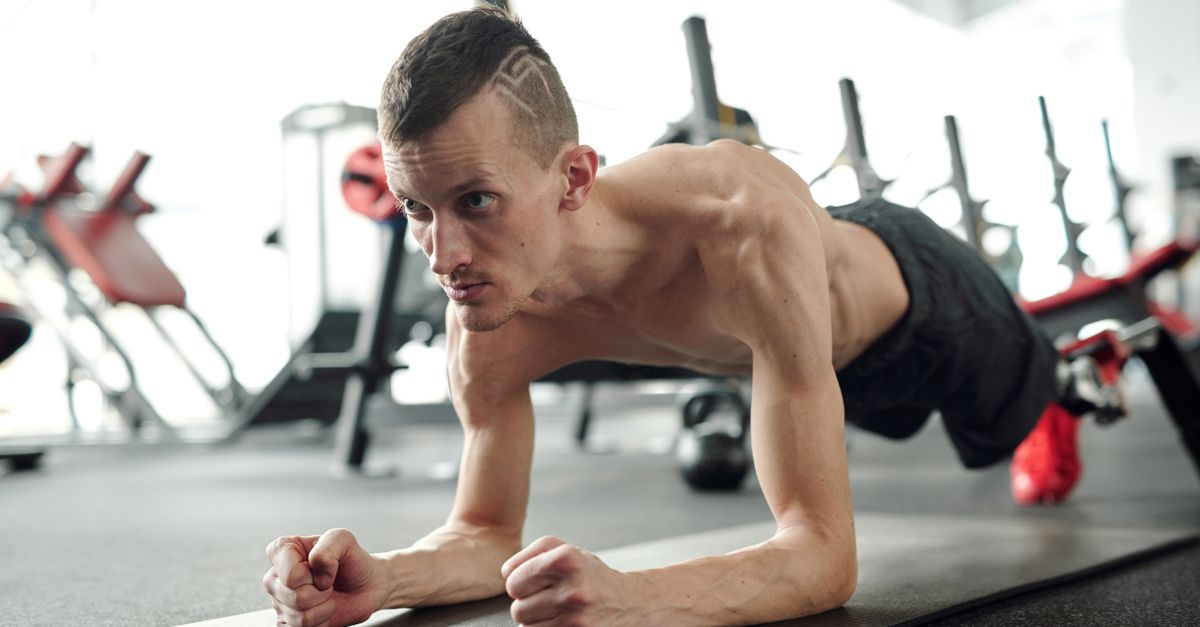
Now consider the plank. Instead of bending your spine, a plank asks you to do the exact opposite: stay as stiff as a wooden board while gravity tries to drag your hips to the floor. This type of training is called an isometric hold, meaning your muscles fire hard without your joints actually moving.
When you hold a solid forearm plank, you hit the front abs, but you also force the transverse abdominis to work. That is your deepest core layer, acting like a natural weight belt that pulls your belly inward and protects your spine. At the same time, your shoulders, chest, glutes, and back muscles have to fire together just to keep you level. It is a full-body team effort rather than a solo act.
Real-Life Strength: Why Anti-Movement Matters
In day-to-day life, your core rarely needs to curl your ribcage down to your knees like a sit-up does. Instead, its main job is stopping unwanted movement so you do not hurt yourself.
Imagine another fictional scenario where you are walking a lively sixty-pound dog on a leash. Suddenly, a squirrel darts across the sidewalk, and the dog bolts forward. You do not curl into a ball to keep your balance. You brace your midsection, lock your hips, and resist being pulled flat on your face. That is pure plank strength in action. Planks train your body to lock down and stay safe whenever sudden outside forces try to push you around.
Which Exercise Deserves a Spot in Your Routine?
So, should you throw sit-ups in the trash forever? Not necessarily, but they probably should not be the star of your ab routine. If you enjoy sit-ups and have a healthy back, doing a few controlled reps with good form will not hurt you. But if you want the best bang for your buck, planks take the crown.
Here is a simple way to look at how to use both:
- Choose planks if you want better posture, less back strain, and a solid foundation for heavy lifting or daily chores.
- Choose modified sit-ups or curl-ups if you specifically want to isolate the front ab surface, but keep the reps low and stay off your tailbone.
- Mix in side planks to wake up your obliques and build side-to-side stability that regular sit-ups completely miss.
Both moves challenge your body, but they do it in completely different ways. Sit-ups build movement strength by flexing your spine, while planks build stability by protecting your spine from moving at all. For most people wanting a healthier back and practical strength, learning to hold a clean, solid plank beats grinding out endless sit-ups every single time. You do not need thousands of reps or complicated machines to build a midsection that works well and feels great. Pick the moves that support your everyday life, focus on good form over speed, and your body will thank you down the road.