Ever stood in front of the gym mirror doing bicep curls, feeling totally fine on your right arm, while your left arm shakes like a leaf? You aren’t doing anything wrong. You’re just a normal person trying to stay healthy and build strength, only to discover your body seems split into two completely different power levels. It is annoying, confusing, and makes you wonder if something is broken inside. Don’t worry, you aren’t broken. In this guide, you will find out why one side always wants to outlift the other, where those sneaky hidden imbalances come from, and how simple adjustments can fix the gap. By the end, you will know how to train smarter, avoid injuries, and finally get both sides pulling their own weight.
The Brain’s Favorite Highway
Your brain is like a busy dispatch center sending messages to your muscles. When you decide to lift a weight, your brain fires electrical signals down your spinal cord to make those muscle fibers contract. Here is the catch: your brain loves shortcuts.
If you’re right-handed, you have spent your entire life using that hand to write, brush your teeth, throw balls, and open stubborn pickle jars. Because you use it all day, the nerve pathway to that side is like a smooth, eight-lane highway. Signals fly down it instantly. Your left side, on the other hand, is more like an overgrown gravel road. The brain just hasn’t practiced sending signals there as often. So even if the muscle on your left arm looks the exact same size as the right, your brain simply cannot recruit as many muscle fibers at the exact same split-second. It feels heavier because the wiring is slower.
The Sneaky Habits of Daily Life
Lifting weights doesn’t only happen when you are holding shiny metal in an air-conditioned room. You lift things all day long without realizing it, and that builds silent strength on one side.
To see how this works in the real world, let’s look at a fictional scenario. Picture a guy named Sam. For five years, Sam has carried a heavy laptop bag over his left shoulder while walking ten blocks to his office. When he grabs groceries, he hooks four heavy plastic bags on his left wrist so his right hand is free to check his phone. Without knowing it, Sam gave his left shoulder and upper back thousands of extra hours of work. When he hits the gym on Saturday to do single-arm shoulder presses, his left arm easily beats his right.
Take a look at your own habits. Do you always hold your kid on your left hip? Do you lean all your weight on your right leg while waiting in line at the coffee shop? These tiny everyday actions add up fast.
How Two-Handed Bars Let the Strong Side Cheat
Once you step into a workout with those daily habits in your back pocket, standard gym equipment can actually make the gap wider. Barbells are great tools, but they are world-class liars.
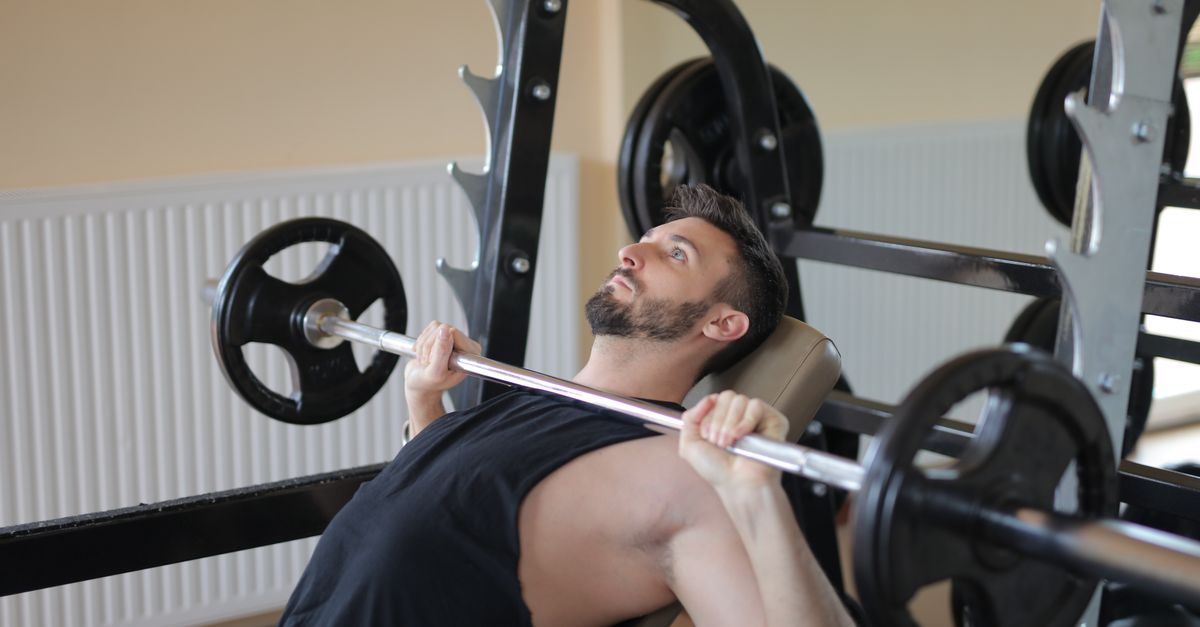
When you grab a barbell to do a bench press, an overhead press, or a back squat, both hands are holding the exact same piece of steel. It looks like both sides are sharing the load down the middle. In reality, your dominant side will quietly steal the show. If your right chest is stronger, it will push 55% of the bar while your left side only handles 45%. You still lock the weight out, your brain feels like you did a great job, but your right side just got stronger while your left coasted along. Over a few months of this, the strength gap turns into a giant canyon.
Ghosts of Old Bumps and Bruises
Sometimes the root cause isn’t about strength at all; it’s about old protection habits your body never dropped.
Think back to that sprained ankle you got playing middle school soccer, or that wrist you jammed on a skateboard years ago. When an injury happens, your nervous system alters the way you move to keep you from feeling pain. You limped for three weeks, putting all your weight on the healthy leg. The injury healed, the pain went away, but the movement pattern stayed stuck in your muscle memory. If one ankle is stiff and can’t bend forward properly, your hip on that side won’t sit right during a squat. That forces your opposite leg to take the brunt of the work. You might think one leg is just naturally weak, when it’s really just guarding an old memory.
Real Bodies Aren’t Built Like Cookie Cutters
We love the idea of perfect balance, but the human body was never designed to be a mirror image from side to side.
Inside your chest and belly, your organs aren’t evenly spaced. Your heart is on the left, and your massive, heavy liver sits on the right. Your diaphragm, the big breathing muscle under your lungs, is actually larger on the right side than the left. Because our internal setup isn’t symmetrical, our skeletons rest slightly twisted by nature. It’s totally normal to have one leg slightly longer than the other, or one shoulder socket that sits a tiny bit deeper. Chasing a world where your left and right sides can lift the exact same poundage with the exact same ease is like expecting two trees in the woods to grow identical branches. A small difference is healthy and natural.
Helping the Weaker Side Catch Up
While you don’t need absolute perfection, you definitely don’t want a huge gap that makes you tilt or hurt your back. Fortunately, fixing it is pretty straightforward once you change your routine.
Here are three simple rules that make a massive difference:
- Ditch the barbell for a while: Swap in dumbbells, kettlebells, or cables. When each arm or leg has to hold its own weight, the strong side can’t cheat anymore.
- Let the weak side be the boss: Always start your sets with your weaker side. If your left arm can only squeeze out eight reps with a thirty-pound dumbbell, stop there. Do not do ten reps on your right side just because you can. Match the weight, match the reps, and wait for the weak side to level up.
- Add one bonus set: At the end of an exercise, give your weaker side one extra set of six to eight clean reps to give it a little extra love.
At our training group, we see this exact issue with folks every single day. People come in worried that their bodies are broken, but once we switch them to single-arm moves and let the lagging side set the rules, things balance right out. You don’t need fancy fixes; you just need to give the quiet side a chance to speak up.
Having one side stronger than the other can feel frustrating, but it is just how human bodies roll. Daily routines, old ankle rolls, and fast brain wiring all team up to make one side do extra heavy lifting. The good news is you can balance things out without pulling your hair out. Switch to single-arm and single-leg exercises, let your weaker side set the pace, and pay attention to how you carry your everyday stuff. You will never be a hundred percent identical on both sides, and that is totally fine. What matters is building a body that moves well, stays pain-free, and handles whatever life throws at it. Grab those dumbbells, stay patient, and enjoy the progress.